Welcome to the December 2025 Japan Rail Enthusiast Magazine
Season’s greeting! We have reached the end (almost) of another year. Here at TS Japan Rail we are already working on rail enthusiast tours for 2026 and even 2027 as well trip planning for those who want to Explore Japan by Train next year.
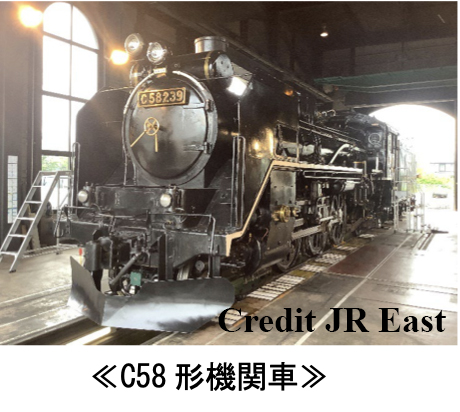
It is good to see that Oigawa Tetsudo is again running a full timetable of steam and that JR East is seriously considering bringing back into service one of its Steam Locomotives (C58-239) to run on the Tohoku Main Line in Iwate Prefecture, although we will need to wait until 2029 for that.
Our articles in this edition, are mostly positive although the first one is not so much. Fare increases (JR East), shinkansen freight, potential new steam hauled services and some new trains are all featured in this month’s edition. We can only include a few articles each month, if there is something particular you want information on then please feel free to contact us.
We hope that 2026 will be a good one for you. If you are planning to come to Japan next year, we are ready to help you with ideas and travel planning!
TS Japan Rail will be working through to 31st December, but we will take a few days off early January (1st~4th) for the Japanese New Year Holiday.
Stephen Turner
JR East fare increase details announced
The Ministry of Land, Infrastructure, Transport & Tourism (MLIT) had already approved JR East’s request to increase fares by an average of 7.8%. It will take effect on the 14th March 2026. This is the first substantial rise in rail fares since 1987.
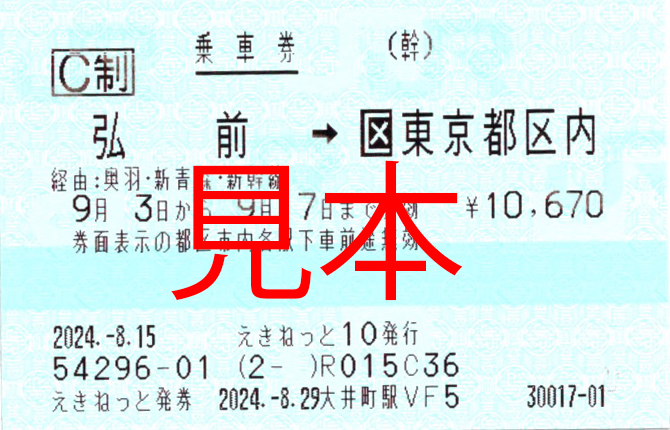
The average fare increase is 7.8% but outside of central Tokyo the average will be 4.8%, In the central Tokyo area (in particular Yamanote Line, Chuo Line & Keihin Tohoku Line in the 23 wards area) however the increase will average will be higher, at around 13.4%.
The lowest fare will rise from ¥150 to ¥160 (paper ticket) or ¥144 to ¥155 using IC card. (using IC cards the actual fare is pai rounded to ¥1; for paper tickets the fare is rounded up to the next ¥10, hence IC cards are cheaper to use)
The reason why fares in the central Tokyo area will go up by the greater amount is that currently, journeys in the central Tokyo area (roughly equivalent to the 23 wards, including Yamanote Line, Kehin Tohoku Line and Chuo Line within that area) have enjoyed a discounted fare rate which has been based on sectors rather than distance travelled. This meant that effectively you could travel most of the way around the Yamanote Line paying only the minimum fare. From the date of the fare increase fares in Tokyo will be based on the same scale as the rest of the JR East area and be based on distance travelled.
[above are just averages refer to fare tables for exact increases]
Changes to how fares for journeys that cross JR company boundaries will be calculated
Another change that will take place is that the way that fares across JR company boundaries will be calculated. Although people often refer to “JR”, JR is actually made up of 5 regional and independent passenger companies (and 1 rail freight company).
Currently basic fares are calculated based on distance travelled irrespective of crossing over JR rail company boundaries. This is a legacy of the privatization of the government owned Japan National Railways (JNR). This works when the JR company fare scales are all the same, but when they start to differ it leads to anomalies. Therefore a new system for calculating such fares (just the basic fare) called Cumulative addition calculation method” (累計加算方式) will be introduced
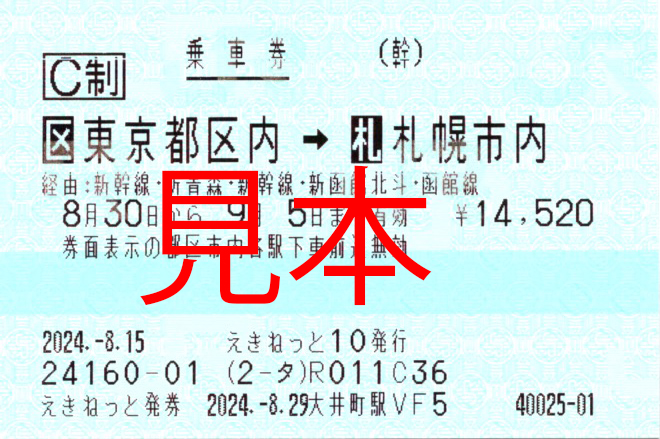
- Step 1 – Initial basic fare calculated based on total distance travelled (on JR network*) using a “uniform fare rate” agreed amongst JR companies.
- Step 2 – For each JR rail company sector, and for those sectors, the uniform rate will be adjusted by the difference amount between the uniform rate and the relevant company’s fare rate (for the relevant distance travelled) where this is higher than the uniform fare rate.
It will still be cheaper to buy through (basic fare) tickets, and we will continue to recommend that where possible travelers buy through basic tickets. In fact you can reduce the cost of your travel when using ordinary tickets by planning how to buy the tickets for each sector.
- Shinkansen & Limited Express fares
-
Shinkansen and Limited Express supplementary fares will not change
- Commuter Passes will also go up in price
-
Commuter passes will also go up, on average by around 12%, but those commuter passes that include travel in the central Tokyo area will be higher. School commuter passes outside of the central Tokyo area will not go up, but those that involve travel in the central Tokyo area will increase by an average of 12.4% (most commuter passes are paid by employee’s employers)
- JR Japan Rail Passes and other passes
To date there have been no announcements of changes to prices of JR Japan Rail Passes, JR East Regional Passes and other JR East passes.
We would expect that many if not all passes that include or cover the JR East area will increase in price and we expect this to be announced early next year.
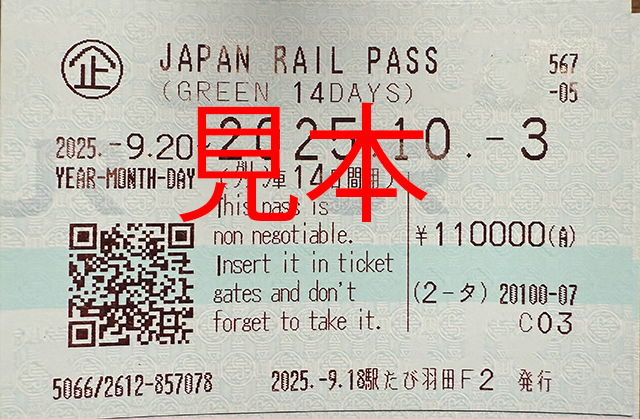
Once the information becomes available TSJR will be updating its information, but for those travelling after 14th May 2025 please be aware of this!

Once the information becomes available TSJR will be updating its information, but for those travelling after 14th March 2025 please be aware of this!
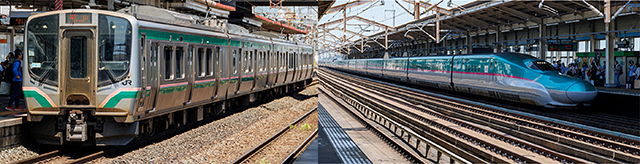
JR East considering a new Steam Locomotive service to start in 2029

Up until 11th June 2023 JR East operated its SL Ginga steam hauled service between Hanamaki and Kamaishi on the JR Kamaishi Line in Iwate Prefecture. The locomotive used was C58-239.
This line has a number of steep gradients so an old converted KiHa141 was used to provide extra power, as well as passenger accommodation. The main reason for the retiring of the SL Ginga service was that the KiHa141 units which dated back to JNR times, had become too old to operate. The locomotive however has remained at its base, Morioka Depot, and occassionally blows its whistle, although has not operated.
JR East have announced that they are studying reintroducing the steam locomotive to service, operating on the Tohoku Main Line between Morioka and Ichinoseki. If the plan is realised it will restart operations in 2029.
This is good news as it has been a concern of rail fans that the number of operational SLs has been diminishing and breakdowns are occurring more often.
JR East Press release (Japanese) Click here
Shinkansen Freight Service to start 23rd March 2026 between Morioka and Tokyo
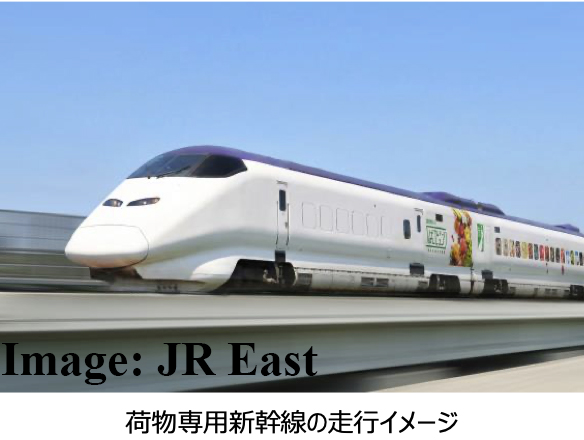
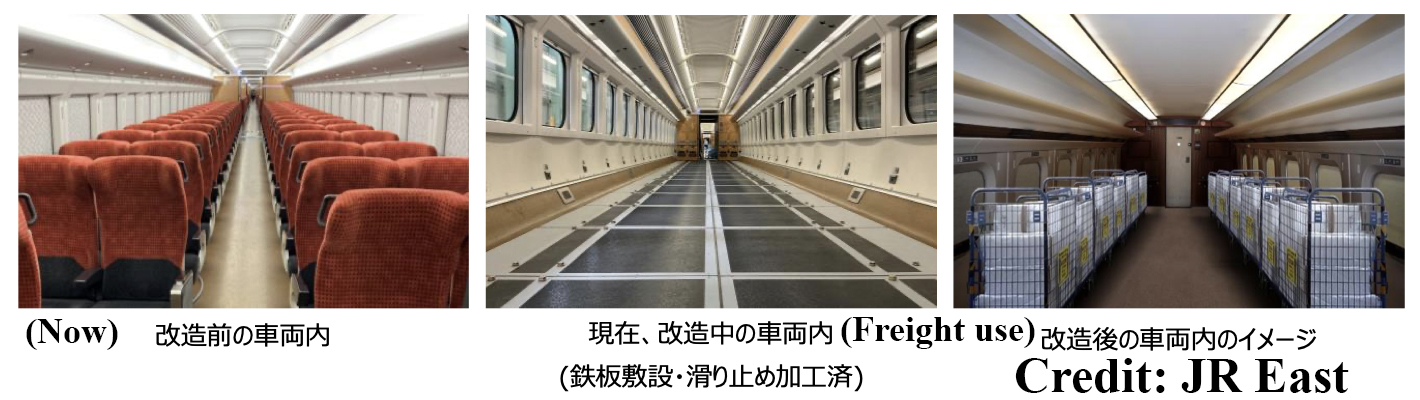
JR East has announced that its new dedicated freight only shinkansen service will start on 23rd March 2026 using a converted Yamagata Shinkansen E3 unit.

The service will operate from JR East’s Morioka Shinkansen Depot to the JR East Tokyo Shinkansen Depot in conjunction with a passenger service (E5 unit will be coupled to the E3 unit on a Yamabiko service).
JR East will introduce Automated Guided Vehicles in the two shinkansen depots to allow for loading / unloading of the train. JR East is also working with JAL Cargo and Japan Post for onward transmission of goods, mostly expected to be fresh produce from Northern Japan, which could allow such produce to be delivered to other Japan and even Asian destination in around 24 hours

JR East Press release (Japanese) Click Here
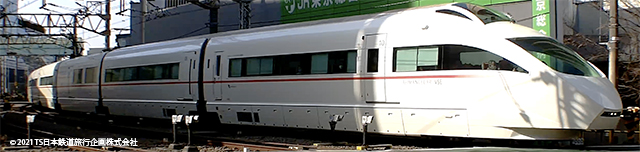
Odakyu to introduce new Romance Car Model in 2029 to replace the 30000 EXE series.
Famous with domestic and nowadays inbound tourists, Odakyu’s Romance Car Limited Express trains have been plying between Tokyo’s Shinjuku and Hakone Motomachi in Kanagawa since 1957. The trains point to fame is the panorama view in the first and last car of the trains, with many of the models having the driver seated in a “loft” above the passenger compartment.
Odakyu plan to launch a new Romance Car model in March 2029. It has been designated 80000 series and will “replace” the VSE 50000 series that was retired in 2023. There were actually only 2 VSE model trains introduced, which were retired after a relatively short 18 years in service due to high maintenance costs.
The new 80000 series will follow the concept of “Water” and the external colour will be a pale aqua blue. The body will be designed so as to appear to have a ripple effect as it passes. The 80000 series is described as the successor to the 50000 VSE series which as mentioned above retired in 2023, but will actually replace the EXE model which was introduced in 1996.


Odakyu Press release (Japanese) Click Here
Ou Main Line – Yamagata Line to get new trains (E723-5000 series)
JR East has announced that it will be introducing new trains on the Ou Main Line (also known as the Yamagata Line). This line is standard gauge as it is shared with the Yamagata Shinkansen.
The new trains will operate between Fukushima (Fukushima Pref) and Shinjo (Yamagata Pref) via Yonezawa and Yamagata and will replace the aging (1999) 701-5000 series (Yonezawa~Shinjo) and the (1991) 719-5000 series (Fukushima~Shinjo)
The new trains, which will all be 2 car units and be introduced into service from Autumn 2026. 22 units in total will be introduced. The new trains will offer better passenger comfort & barrier free facilities. As these trains share the same tracks as the Yamagata Shinkansen they use 20KV AC power supply and are standard gauge.

The Yamagata Line (Ou Main Line) is an interesting line for rail enthusiasts. Prior to the Tohoku and Yamagata Shinkansen it was a major route for trains (passenger and freight) bound for Yamagata and Akita and even Aomori from Tokyo. The section between Fukushima and Yonezawa is of particular interest as there are still signs of a number of switch backs, (some of them covered to protect against heavy snow) to allow trains to pass on the steep incline as trains headed north. It is best to take a local train on this section as it is hard to see from the Shinkansen.
JR East Press Release (Japanese) Click Here
JR Shikoku to introduce new Hybrid Diesel Electric 2 car units to replace JNR era KiHa47 DMUs

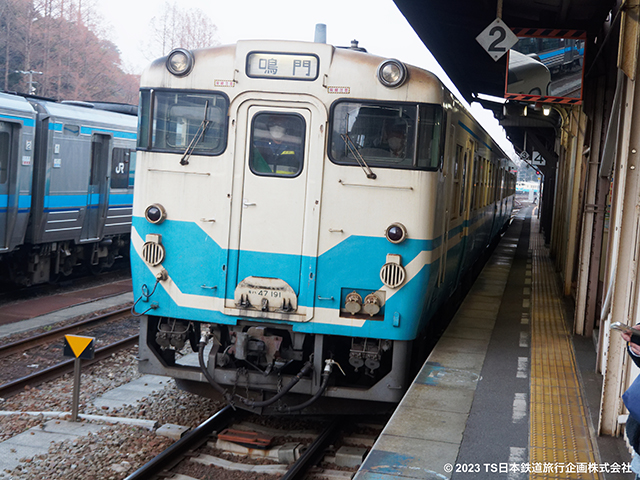
JNR era KiHa 47 DMUs (left) once a main stay of many rural lines throughout Japan have received more “bad news” as JR Shikoku announced that it will be introducing a new diesel electric hybrid 2 car unit to upgrade its fleet (above). The new 2 car units will be designated as 3600 series. The trains will be allocated to the JR Shikoku’s Tokushima Depot.
The 100km/h trains will have improved passenger facilities including accessible toilets. As is now often the case with new trains, seating will be longitudinal type rather than cross type.
JR Shikoku is one of three JR companies where although privatised the government still owns all the shares as financial performance has meant that it so far has not been possible to sell those shares and list the company on the stock market. The railway company is receiving investment money from the government in order to upgrade its rolling stock, so as to reduce maintenance and fuel costs and also make trains more attractive for passengers.
Tokushima in particular is a good place (although may be not for long!) to see older, JNR era rolling stock!
JR Shikoku Press Release (Japanese) Click Here
Related Post – exploring Railways in Shikoku

Quick News Items
Oigawa Railway has restarted steam train operations other than the “Thomas train”

Oigawa Railway had suspended all of its steam hauled trains, except for the “Thomas Trains” at the start of the summer (May 2025). This was due to C10-8 being found with some mechanical issues and no other locomotives except for C11-227 which is used for the Thomas trains. Oigawa also decided to carry out regular inspection and maintenance of C10-8 at the same time as addressing the immediate issues. C10-8 has been bought back into action and been operating since 21st November hauling trains between Shin Kanaya and Kawane Onsen Sasamado, on most days in December.
SL Gunma Derailment – uneven load on the tender thought to have been the cause.
On the 4th September SL D51-498 which had been out of service for repairs following a mechanical issue derailed on the Joetsu Main Line between Gohan and Kamimaki during a test run. Although the official report has not been published yet, the cause of the accident is said to have been uneven axle load on the tender (which is the part that derailed).
JR East Shinkansen uncoupling issue
JR East has reported that the two shinkansen uncoupling incidents (E5+E6 units unexpectantly decoupling whilst train in motion) were probably caused by a fault with the electric coupler controller on the E6 unit that sent an erroneous uncoupling signal. After the first incident (Sept 19th 2024) JR East reported that it was a metal shavings getting into the emergency separation control unit. After the second incident (6th March 2025) a malfunction of the electric coupler controller on the Komachi Unit was identified. It was also found that the said electric coupler controller had been taken out of the first incident E6 unit and later placed into the second incident E6 unit.
JR East Press Release (English) Click Here (Japanese) Click Here

Rail Line damaged in recent earthquakes effecting Iwate & Aomori Prefectures
The Tohoku region was shook by a strong earthquake (and after shocks following) 8th December (23:15 magnitude 7.5 intensity 6+) off the Iwate coast. This bought most train services to a stand still, however most lines were bought back in to operation during the next morning.
One line, JR Hachinohe Line, however is still out of operation at the time of writing due to damage to an overhead section of the line. All services between Hachinohe and Kuji, where the line connects to the Sanriku Railway have been suspended with no date for the line to be reopened.
With the ongoing warning of further aftershocks, extra precautions have been taken in the region, with trains and stations being stocked with extra supplies and familiarisation with tsunami escape routes.