Introduction
Apologies that the April edition of the TS Japan Rail Japan Rail Enthusiast Magazine is late! We are also combining the April & May editions. We have been very busy working on two group tours , one for rail enthusiasts and the other for both those who enjoy rail travel and rail enthusiasts. We have also had some individual travellers who we have helped with some interesting itineraries.
We often see on social media statements like “you need a car to really explore Japan” and although we would not disagree that there are definitely places where a car would allow you to see more, equally there are many places which can be reached by public transport – we have a growing list of clients who have proved that! For rail enthusiasts there are also many things to see! Here is a recent TSJR Q&A video, aimed at those thinking about Exploring Japan by Train:


I am writing this at the end of the Golden Week Holidays, a time when there are a number of consecutive or close together public holidays. A time most local rail enthusiasts stay at home as trains are crowded and hotel charges leap up. Our usual sources showing extra trains, changes in formations, special trains etc…has grown to an enormous size. For the on line version you get finger fatigue with the amount of scrolling required! But, having access to this information, almost entirely in Japanese, is one of the areas where we can add value for visiting rail enthusiasts.
Items in this edition include Nankai’s newluxury tourist train “Gran Tenku” , QR code tickets replacing magnetic strip tickets and the slow decline of the 211 series EMUs.
Stephen Turner
NEWSFLASH!
NHK World’s Japanology Plus featuring Stephen Turner to be rebroadcast
Presenter Peter Barakan interviewed TS Japan’s Turner on his love of Japanese Railways and rail travel whilst travelling on the Kominato Railway in Chiba Prefecture. The program will be re-broadcast on NHK’s international TV channel NHK World.
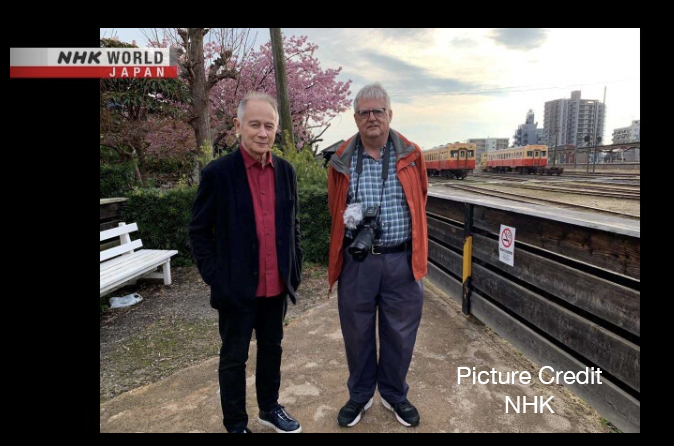
- Channel: NHK World Japan (cable television outside of Japan)
- Date / Time: 28-May-2026 11:30 am (JST) (check local listings for broadcast times outside of Japan)
Japan Rail Passes bought thru agents to increase in price from Oct 2026
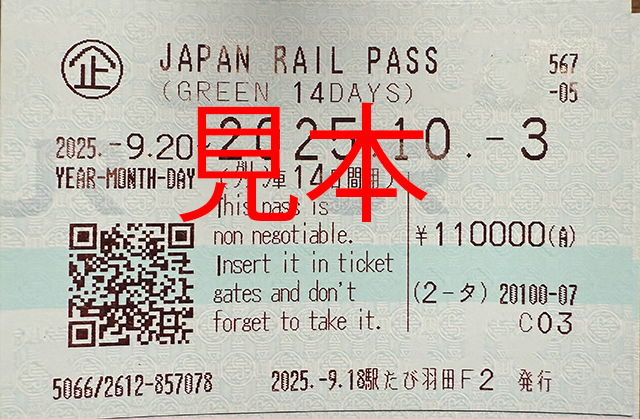
The JR Companies have announced that the JR Japan Rail Pass (ordinary & Green) bought through travel agencies and non JR on-line vendors will increase in price from October 1st 2026 by around 5%~6%. For example the 7 Day ordinary pass will rise in price fron ¥50,000 to ¥53,000 and a 21 day Green Pass from ¥140,000 to ¥147,000.
JR East to replace its 211 series train operating in its Nagano Branch area, but will refurbish those in its Takasaki Branch area.


JR East is going to start replacing its Nagano Branch 211 series EMUs in Fiscal 2026 (April 2026~March 2027) with a new Nagano specific version of its E131 series EMUs. The Nagano 211s were originally used on the JR East section of the Tokaido Mainline (Tokyo~Atami) as 211-0 series and were shortened and re-liveried to 3 and 6 car 211-3000 series units. They will be replaced by 3 car E131 units in a Nagano blue livery.
The E131, based on the inter urban E233 units is becoming the standard for JR East on many of its less busy non urban areas (1500V DC lines) with variants operating on the Tohoku Main Line, Nikko Line, Chiba branch lines and Sagami Line.
JR East’s Takasaki Branch, that uses 211 series EMUs on its rural Gunma lines (Joetsu Line, Ryomo Line,, Agatsuma Line, Shinetsu Line) is going a different way and will start a refurbishment program for its 211 series trains, extending their lives to the late 2020s early 2030s. The Takasaki 211 series trains were cascaded and modified from the Utsunomiya and Takasaki Lines.
A total of 1,914 cars of the 211 series were built from 1985 to 1991 and were extensively used by JR East, JR Tokai and JR West.
Today JR East is the only JR company still operating this series, but on rural lines rather than the inter-urban lines that the series was originally built for.
2 non JR Operators have acquired a small number of units from JR Tokai:
Sangi Railwaysin Mie Pref acquired ten 211 series 3 car sets for its Sangi Line. 8 sets will replace Sangi’s old fleet of ex Seibu 701,401 & 101 series units that date back as far as the 1960s. The 211 series sets will be classified at 5000 series. the two additional sets will be used for spares and will not enter service. The 8 units going into service have been re-liveried and modernised with passenger information screens and barrier free access (with the help of JR West).
The small Ryutetsu railway company in Chiba Prefecture has acquired 4 JR Tokai 211 two car units which will replace its aging ex Seibu “new” 101 units that date back to the 1970s early 1980s. Ryutetsu operates one 5.7km line (Nagareyama Line).
Ryutetsu was famous for giving each of its ex Seibu units there own bright colour livery and name. We are waiting to see if it carries on the tradition with its new 211 series.
Magnetic backed tickets on their way out, QR code tickets on the way in
The high costs of magnetic backed tickets, cost of maintaining ticket gate machines and their mechanical parts and difficulty recycling these tickets is leading to more railway companies to switch to or contemplate switching to QR tickets.
Although these tickets—and the equipment needed to issue them and operate ticket gate readers—require an upfront investment, they are expected to lower overall costs over time. The paper tickets are also recyclable. Additionally, there is an option to transition to digital formats, allowing even local journey tickets to be issued online via smartphones.
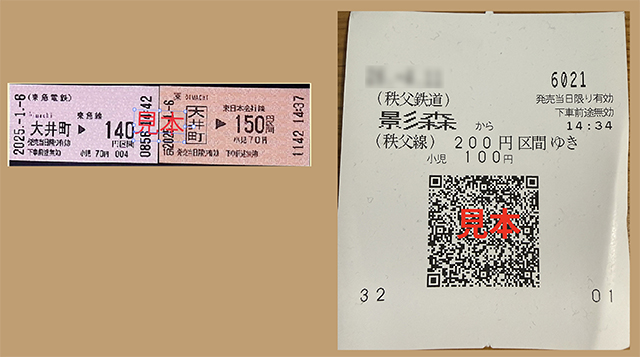
Some companies like Tokyu have already introduced ticket gates with QR readers at all its stations, other railway companies are in the process of introducing QR ticket readers or contemplating doing so. Smaller railway companies in particular are looking at switching to QR code tickets. Close to Tokyo, Chichibu Railway has already done so, as can be seen in the above picture..
JR Tsugaru Line section between Kanita and Mimmaya in Aomori Prefecture to Close…
and diesel units that were going to be used on this line reallocated to a recently de-electrified section of the Ou Main Line.
Once a feeder line to ferries crossing the Tsugaru Straits between Honshu and Hokkaido, the JR Tsugaru Line between Aomori, Kanita and Mimmaya has seen its fortunes decline, particularly the section between Kanita and Mimmaya, as the Seikan Tunnel and later the Hokkaido Shinkansen took traffic away from the line.
The section between Kanita and Mimmaya has not seen any trains since 3rd August 2022 when violent storms caused severe flooding and damage to this section of the line. The cost of reinstating the line would be to high compared to usage, so the already sparse rail service was replaced with road transport.
On the 24th March, after reaching agreement with local governments, JR East submitted a formal request with the Ministry of Land, Infrastructure, transport & Tourism (MLIT) to permanently close the Line. It likely that approval will be given and the line will formerly close in 2027
De-electrification??
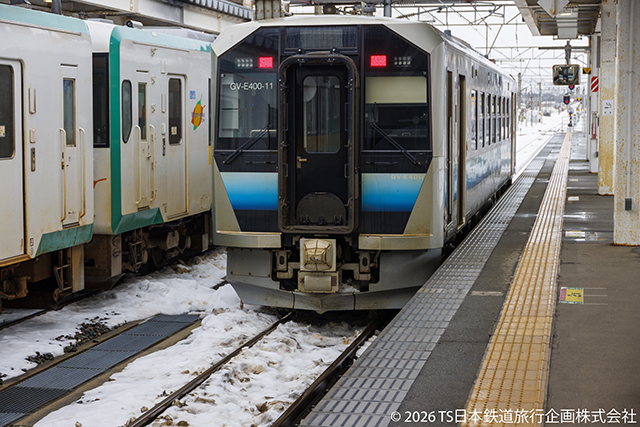
An interesting side story to this closure is that the Kanita~Mimmaya section of the Tsugaru Line is non electrified and was operated by KiHa40/47s (the section between Aomori and Kanita is electrified and operated by 701 series EMUs). When JR East phased out it final KiHa40 / 47 units in 2020/1, all of which were operating in Akita and Aomori prefectures, it ordered new GV-E400 units to operate on this line.
However due to the storm damage they never actually operated on this line except for occasional Aomori~Kanita services.
Following storm damage on the Ou Main Line between Shinjo and Yokobori that damaged track and overhead power lines and equipment in July 2024. JR East made the decision to de electrify this section of the Ou Main Line and reallocate the Tsugaru Line intended GV-E400 DEMUs. the reasoning behind this is quite simple; in case of future storms (or earthquakes) it is much easier, cheaper and faster to restore a non electrified line than an electrified line. Although in the past the Ou Main Line was a major trunk route linking Yamagata, Akita and Aomori Prefectures with the Kanto region, nowadays, apart from freight, much of the line only sees local rural passenger traffic, and the section from Fukushima to Shinjo is now standard gauge for the Yamagata Shinkansen.
Nankai’s new tourist train “Gran Tenku” debut
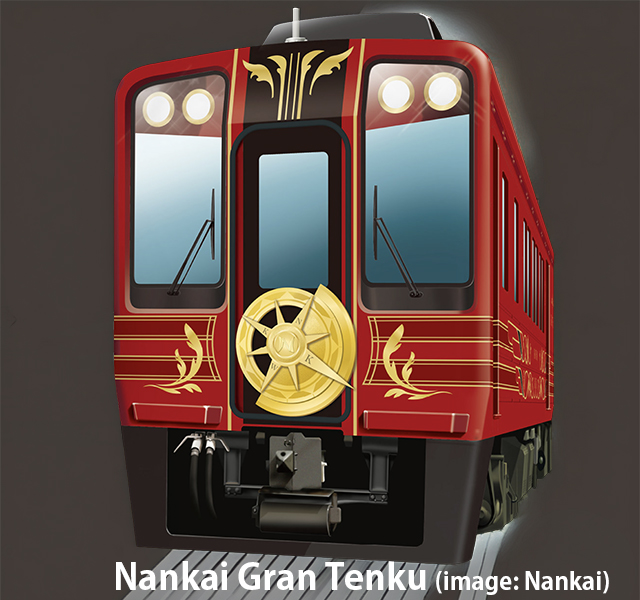
Nankai’s new tourist train “GRAN Tenku” (GRAN天空) debuted on April 24th 2026.
As part of Nankai’s strategy to take advantage of the growing number of tourists (including inbound visitors) it has introduced this new luxury tourist train, an upgrade of its former “Gran” tourist train and a compliment to the Koya Limited Express. It even includes dining for premium passengers.
Technical details: The train is a converted Nankai 2000 series 4 car unit. Internally it has been completely refitted with locally handcrafted furniture and fittings. It has also been fitted with new traction motors and other technology to be able to better handle the mountainous route between Namba and Gokurakubashi.
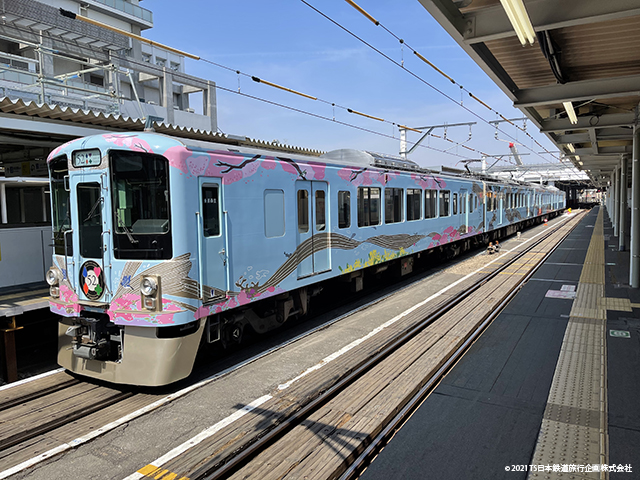
Seibu’s restaurant train “52 Seats of Happiness” celebrated its 10th Anniversary in April. The train runs on weekends and holidays between Seibu Shinjuku or Ikebukuro and Seibu Chichibu in Saitama Prefecture.
Seibu is going to introduce a new restaurant train based on the “Laview” limited express model and to be called “Vies”. The train is currently being built by Hitachi. It is due to be debuted in 2028.
Quick News
- Kintetsu tested the new 6A series and plans for it to be introduced for revenue service on the South Osaka Line starting May 19th. This will be the first general purpose EMU to be introduced on the South Osaka and connecting lines in more than 20 years. The South Osaka Line, Yoshino Line, Nagano Line and Gosho Line are all Japanese standard narrow gauge 1,067mm gauge unlike the rest of the Kintetsu network that is standard 1,435mm gauge. This follows on from the introduction of the 8A and the departure from Kintetsu’s standard livery to a blue livery, the 1A series (the standard gauge version of the 6A series) and the soon to be introduced 1B series as Kintetsu updates its somewhat aging fleet. With these units, Kintetsu will introduce its evening rush hour premium seat service called “Suwa-reru”. this service will start 1st June 2026
- Sotetsu 13000 series unlike other Sotetsu new trains in recent years the 13000 series has been designed solely to work on Sotetsu’s network and cannot be used on thru services to JR East and Tokyu. It’s livery is the now very common Yokohama Navy Blue. It debuted in March 2026. It will replace the 8000 & 9000 series trains.
- JR Kyushu receives its first Tokyo Wan Kousoku Railway (東京湾高速鉄道臨海線 Rinkai Line) series 70-000 trains which it has acquired to replace the aging JNR series 103 series on its Chikuhi Line. The Chikuhi Line stands out in the JR Kyushu network as it is 1500V DC powered, rather than 20KV AC tha the rest of its electrified network is. The Rinkai Line (as it is commonly called) is currently replacing its 70-000 series (basically JR East 209 series) trains with new 71-000 series which are basically JR East E233 series models.
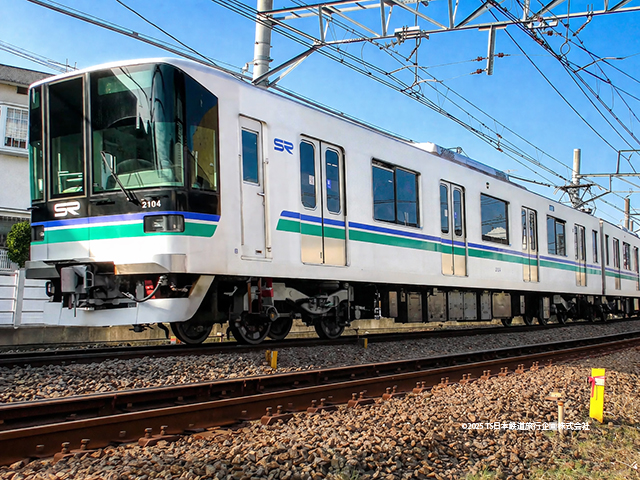
- Saitama Kosoku Railway plans to carry out refurbishment of its train fleet internally. Smaller railway operators, such as the third-sector Saitama Kousoku Railway (SR), typically rely on larger railway companies to handle major maintenance and refurbishment work. This often requires transporting trains to external facilities, sometimes even by road, which increases both costs and turnaround time. SR, which runs a single line between Akabane-Iwabuchi and Urawa-Misono and onward through services with the Tokyo Metro Namboku Line and the Tokyu Meguro Line, has attracted attention in railway media for choosing a different approach. The company has decided to refurbish its 2000 series trains in-house, working in collaboration with Tokyo Metro’s maintenance subsidiary, Metro Sharyo (MS). Together, SR and MS have developed a streamlined method that involves inspecting each train individually and replacing only the components that require renewal. This targeted approach is expected to reduce costs by around 20% and shorten refurbishment time by approximately 30%. The time savings are particularly significant for SR, as it operates a small fleet of just ten six-car trainsets and cannot afford extended periods of downtime.
- “Doctor S” to replace JR Tokai’s Doctor Yellow. JR Tokai retired its famous Doctor Yellow shinkansen inspection train in January 2025 (unit T4). JR Tokai has announced that it will have 4 Doctor S 16 car units which unlike the Doctor Yellow will be passenger units but fitted with remote monitoring equipment, so that it can monitor track, overhead wire, and other equipment. The 4 units will be in the standard Tokaido Shinkansen livery of white with a blue band but will have “Dr. S” logos in 20 locations across its 16 cars. JR Tokai News release (Japanese)
- JR Hokkaido publishes its Survival Strategy – Vertical separation model. 8 sections of JR Hokkaido’s 13 conventional lines are loss making with little chance that their financial situation will change. JR Hokkaido is proposing that for these loss making sections the Vertical Separation Model is adopted. In this model, which has been adopted in other areas of Japan as well as in Europe is where local governments take over ownership of the track and station infrastructure, including ongoing maintenance, whilst JR Hokkaido will operate train services as a type 2 operator. JR Hokkaido wants to finalise a plan by March 2027. It will publish an interim report in September 2026. At the same time discussions are underway on the future of the Hakodate Main Line & JR Muroran Line once the Hokkaido Shinkansen section between Shin Hakodate-Hokuto and Sapporo opens sometime in the 2030s. The section between Oshamambe & Kutchan is already slated to close (under legal provision that allows JR companies to close conventional lines that run parallel to shinkansen lines, if they are financially viable (or transfer to a 3rd sector operator).
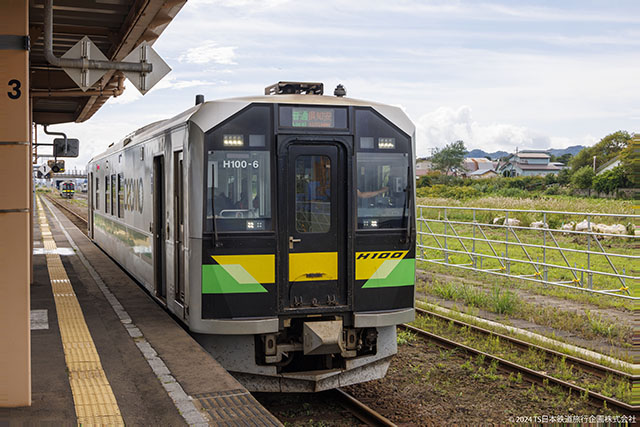
JR Hokkaido Press Release (Japanese)
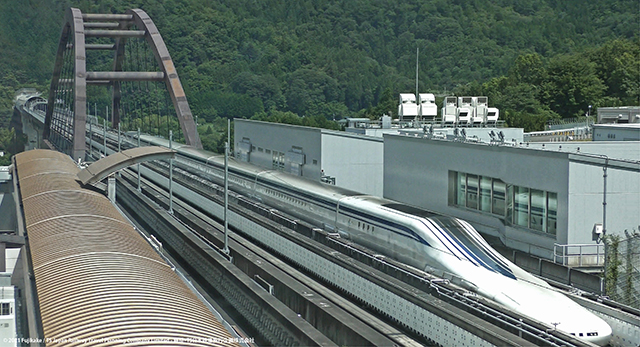
- JR Tokai has announced that the expected opening of the Tokyo~Nagoya section of the Chuo Shinkansen Maglev line is likely to be 2034~2035. Up till now it has said after 2030 due to its dispute with Shizuoka Prefecture and tunnel challenges elsewhere on the route. the Shizuoka dispute has been resolved.
TS Japan Rail caters to all types of railway enthusiasts who are interested in exploring Japan’s Railways and Exploring Japan by Train.
Whether it is riding and seeing the different types of railways in Japan, from the high speed shinkansen to steam hauled trains or seeing heritage rail or even Linesiding, TS Japan Rail can help you plan your trip to Japan. We help both individuals and arrange tours for rail enthusiast groups(*)
(*TS Japan Rail is not a travel agent, but for groups we work with a local travel agent who handles all the bookings and bundles everything into a package)