

Welcome to our August Japan Rail Enthusiast Updates
We are in the middle of another very hot and humid summer, with temperatures throughout Japan reaching and often exceeding 35°C on many days. At the same time, several areas—particularly Kyushu, but also the Japan Sea regions of Koshinetsu and Tohoku—have experienced very heavy rainfall. When I first arrived in Japan more than 30 years ago, you would see very few foreigners here in August. Nowadays, however, with the surge in inbound tourism, the picture is very different.
All that being said, there are still many places you can visit with few or no foreign tourists, along with an interesting rail scene. The San’in region is one such area, and it was featured on our main site during August.
The UK is not the only place where “leaves on the rails” is a problem. On one JR East line, however, the solution may be a bit drastic. There wasn’t a lot of news in August, and unfortunately what did come through was not all positive—but we believe in giving you the whole picture.
Stephen Turner
Both SL Gunma locomotives out of service – Engineers train GV-E197 units hauling the SL Gunma.
In July, JR East’s Takasaki-based SL D51-498 developed mechanical issues, while the C61-20 is undergoing major inspection and maintenance. To keep the SL Gunma train running, JR East has substituted the steam locomotives with special diesel motive power cars, which are normally used for engineering trains and hauling out-of-service stock. These locomotives are rarely employed to haul passenger services.

GV-E197 at Koriyama with ballast wagons.
The GV-E197 together with the E493 series multi-voltage electric unit have been designed to replace JR East’s fleet of Electric and Diesel Locomotives.
Exploring Sanin by Train – also an interesting area for rail enthusiasts
In August on our main site we featured the Sanin Region and some of the interesting railway lines there. Although the article is mainly aimed at those wanting to Explore San’in by Train, but the area is also of interest for rail enthusiasts who want to see other aspects of Japan’s railways, particularly rural railways.


And some special trains…
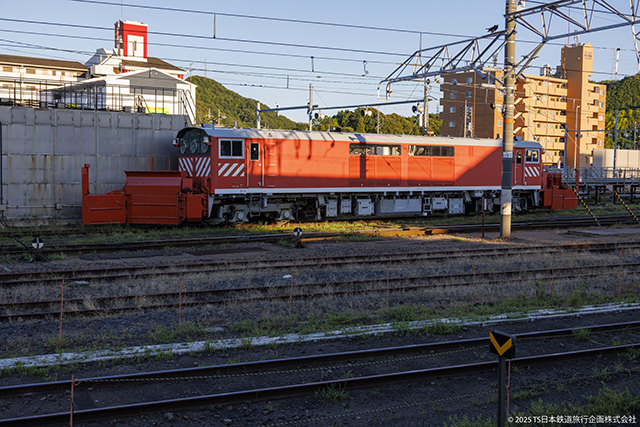
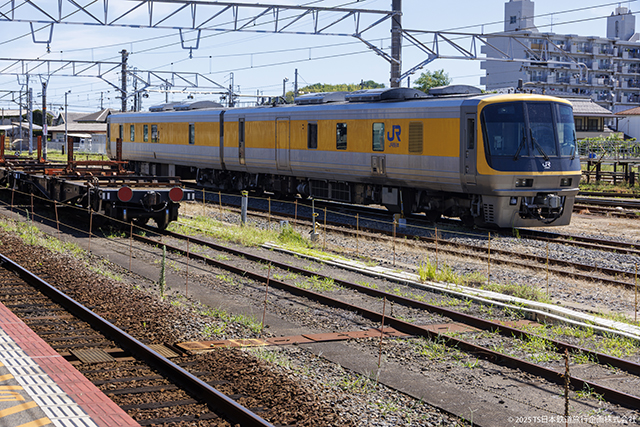
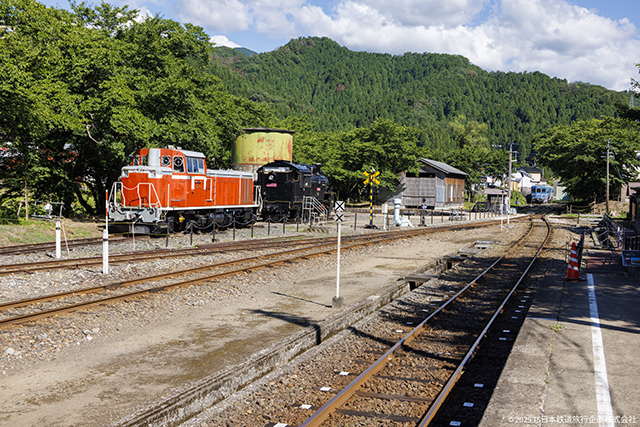
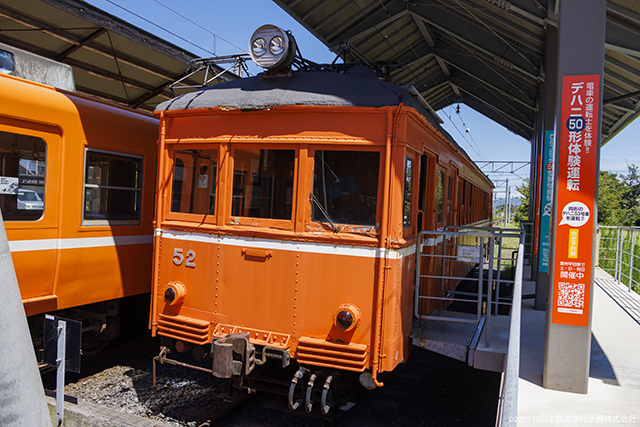
Exploring San’in by Train…read the article here

Increase in Shinkansen service disruptions
Although improvements in technology have improved railway operations, including the Shinkansen, they also may be behind an increase in service disruptions. Also much of the Shinkansen network is around 50~60 years old so much of the physical infrastructure is getting old.
According to a report by Japan’s leading business Newspaper, The Nikkei, the number of number of serious disruptions to services has doubled in a decade.
According to the Nikkei, in 2015 there were 26 serious disruptions. In 2024 there were 52 such incidents. In the first half of 2025 there have been 33 such incidents.
JR East is researching ways to detect potential issues. One issue is that whereas older and often analouge equipment is was easier to detect when it was going to fail or when it had reached the end of its life. With modern technology that is not always possible.
All that being said the number of incidents is still low and Japan’s rail network is still very reliable!
JR East’s E8 Yamagata Shinkansen trains returning to normal service
JR East has been gradually restoring the direct Yamagata Shinkansen service after issues were found with the power supply on the new E8 shinkansen service. It will still take time until the full service is restored but as a solution has been found to the issue trains are being gradually returned to service.
JR East fare increase approved
The government (Ministry of Land, Infrastructure, Transport and Tourism), has approved JR East’s request to raise fares in March 2026 (exact date has not been announced). This is the first network wide fare increase (other than consumption tax increases) in more than 30 years.
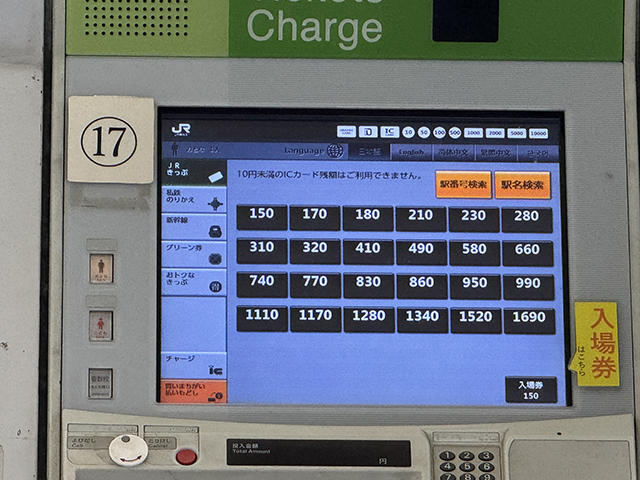
Fares will rise by an average of 7.1%. The lowest fare will increase to ¥160 (currently ¥150), or ¥155 when using an IC card (up from ¥147). The Tokyo “Densha Tokutei Kukan” (Tokyo Special Fare Zone), which essentially covered travel on and within the Yamanote Line area, will be abolished. Travel in the Tokyo area will now carry the same fare rate as elsewhere on the JR East network. As a result, some fares in the Tokyo area will increase by around 20%.
The basic fare rate for distances between 11 km and 300 km will be raised to ¥16.96 per km (+4.7%), while the rate for distances between 301 km and 600 km will increase to ¥13.45 per km (+4.7%). The fare rate for distances of 601 km or more will remain unchanged.
Also, JR Tokai will raise the basic fare on the Tokaido Shinkansen between Atami & Tokyo to bring it into line with JR East’s fare on the conventional line. This means that people with a Shinkansen ticket can still use it to travel between Atami and Tokyo on a JR East service.
There is no news on what will happen to JR Rail Passes, JREast Regional Passes and JR East’s ordinary discount passes, but as these do not need government approval to raise prices and as underlying fare’s have increased it is expected that at least the JR East passes will increase in price.
Like other businesses in Japan, all railway companies are facing higher costs due to wage increases and general inflation, so expect to see other fare increases.
Quick news points
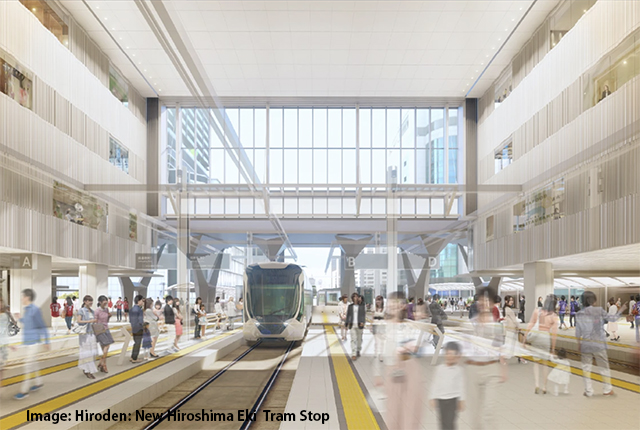
Hiroshima Tram – New more convenient Hiroshima Eki Tram Stop
As part of the Hiroshima Station redevelopment the Hiroshima Eki Mae tram stop is now in the station building adjacent to the JR ticket gates. 3rd August 2025 saw the rerouting of the tram line via an elevated section so that the tram stop is now on the 2nd floor of the station building and just a few steps away from the JR gates. The new route will also make journey times slightly faster, by 4 minutes
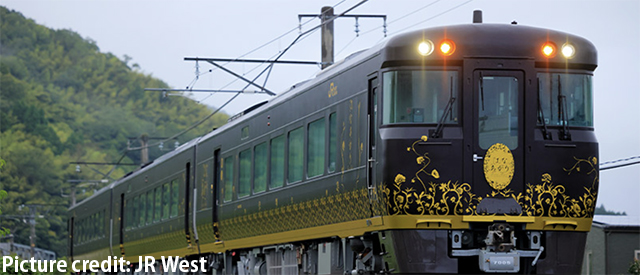
JR West‘s Hana Akari (はなあかり) luxury tourist train will “test run” a new route along the Kansai Main Line.
The train which was converted from a KiHa189 Limited Express DMU and features “Superior Green Cars” has a roster of seasonal routes it operates on. JR West has been discussing revitalising the Kansai Main Line with city and prefectural governments in the areas that it serves and proposed operating a special service using the Hana Akari train during the Autumn. Actual details will be announced in September. If successful the Kansai Main Route, that serves Nara, Iga and Kameyama could be added to the seasonal roster for the train.
Summer Obon Holiday saw 8% increase in passenger numbers compared to 2024
Shinkansen and Limited Express trains throughout Japan had a busy Obon holiday season, with many extra services operating and passenger numbers up 8% compared to 2024. The Tokaidō Shinkansen saw a 13% increase, while the Sanyō Shinkansen rose by 7%, much of this attributed to the Osaka World Expo. In eastern Japan, the Tōhoku Shinkansen recorded a 6% rise, and Limited Express services on the Jōban Line, Sōbu Line, and Tōkaidō Line increased by 19%, 19%, and 23% respectively.
In Kyushu, however, passenger numbers fell slightly due to heavy rain that affected the region, ongoing issues with the E8 Shinkansen on the Yamagata Shinkansen route, and weather- and accident-related delays on the Uetsu Main Line.
Overall just over 13 million people travelled by shinkansen and limited express trains in the period 8th to 17th August.
Power failure on the Osaka Metro strands 30,000 people
On August 13th a power failure effecting the Osaka Metro Chuo Line, which serves Yumeshima where the Osaka Expo is being held stranded an estimated 30,000 people with 11,000 people spending the night at the Osaka Expos site.
The power outage was caused by iron powder and moisture which caused the third rail to short.
OsakaExpo and Osaka Metro took measures to help stranded passengers, although as expected there was chaos.
Leaves on the track is not just a British Problem, but may be Japan’s solution is a bit drastic…
JR’s Yamada Line in Iwate Prefecture is a scenic rural line with steep (for trains) gradients. Every Autumn it suffers a problem that many UK commuters are all too familiar with – Leaves on the Track! This, as UK commuters know, causes delays when trains lose traction on slippery rails.
JR East’s solution to this problem – completely suspend trains on part of the route. It will not provide alternative buses, but as for other reasons passengers can use train tickets on a local express bus service that connects most of the stations on the line.
Arranging tours for rail enthusiasts?
TS Japan Rail are the Japan Rail Experts!
If you are arranging a Japan for Rail Enthusiasts, whether an informal group, a railway society or a specialist travel agent, TS Japan Rail can help you with:
- Travel ideas – whatever your tours purpose or theme we can help you fulfill its objects. We can also help you with ideas that you may be have not thought about so that your group sees the various aspects of Japan’s railways
- Itinerary Planning – we can take the hard work out the planning and also suggest some interesting routes.
- Bookings – We have a great relationship with a local travel agency who can do hotel and train bookings and bundle everything up into a package
Contact us today to see how we can help you info@tsjapanrail.com


