

The Yamanote Line – Tokyo’s Life Line…

Often overlooked by train enthusiasts visiting Japan due to its modernity, we explore in this article the JR East’s Yamanote Line, a crucial transport network that nearly all Tokyo residents and visitors have likely experienced, or if not have definitely seen. It is a 34.5 km, 30 station Line that circles the heart of Tokyo and can be said to be Tokyo’s “Life Line”.
It is often seen as the dividing line between central Tokyo and its outlying areas. Not too long ago, foreigners residing beyond the Yamanote Line were seen as quite adventurous!
In this article we take a look at the Yamanote Line from the eyes of a rail enthusiast
Yamanote Line did not start out as a circle, and legally is not one…
Despite common belief, the Yamanote Line was not initially designed as a loop. Its original purpose was to connect Shinagawa with Akabane and later Tabata to facilitate the transportation of goods between the Tohoku Main Line in the north and the Tokaido Main Line and specifically Yokohama Port in the south. In fact even today, The Yamanote line officially (legally) only consists of the 20.6km stretch between Shinagawa, Ikebukuro, and Tabata, with the eastern part (Tabata to Shinagawa) forming sections of the Tohoku Main Line (Tabata to Tokyo) and the Tokaido Main Line (Tokyo to Shinagawa).

While it does not appear on rail enthusiasts itineraries, except like everyone else to get from A to B. Our experience, however, is that despite lacking the charm of steam trains or other unique elements of Japan’s railways, many railway enthusiasts are captivated by the efficient operation of a bustling railway line with trains arriving every 2 to 3 minutes during the busy morning hours. Moreover, it boasts a rich history and offers various viewpoints to observe the modern urban railway’s distinctive features.
History
As already mentioned, the Yamanote Line was never built as a circle, but came about through the joining of several other lines to form a circle. In fact the first part of the line (Shinagawa~Ikebukuro~Akabane) was built a freight Line. Today this together with the second section between Ikebukuro~Tabata are the original Yamanote Line (legally what is designated as the Yamanote Line) with the section from Tabata to Shinagawa being parts of the Tohoku Main Line and Tokaido Mainline. That being said quite early on dedicated tracks for the Yamanote Line trains were laid, so in practical terms a circular line was developed which is called the Yamanote Line and operates one from an operational perspective.
The history of the line illustrates this:

- 1883 The railway between Akabane and Ueno opened. This was part of Tohoku Line which at that time ran between Utsunomiya to Akabane and then onto Ueno via Tabata.
- 1885 The Nippon Railway opened a line running from Shinagawa to Akabane, running via current stations / areas of Shibuya, Shinjuku & Itabashi. This line was called the Shinagawa Line. This was a freight line joining what would later become the Tohoku Main Line in the North with the Tokaido Main Line in the south. Its primary purpose was to allow the transfer of produce from the Tohoku region to Yokohama Port.
- 1903 A spur was built running from Ikebukuro to Tabata via Otsuka and Sugamo. This was originally called the Toshima Line.
- 1909 The Shinagawa Line & Toshima line were “merged” and became the Yamanote Line. The section between Ikebukuro and Akabane operated as a branch and was unofficially and later officially known as the Akabane Line. The Akabane Line todays forms part of the Saikyo Line.

A couple of interesting points about the name “Yamanote“…
⓵”Yamanote” means edge of the mountain, as at that time (1909) the line was regarded as the border of the more affluent higher ground of western Tokyo and the lower ground of the central part of Tokyo. This was before the Yamanote Line was a full circle
⓶The kanji for the Yamanote Line is 山手線, which is normally read as Yamate (山=”Yama” and Te= 手) If you read the name literally it is “Yamate Line” and this was causing confusion with the Yamate district of Yokohama, as well as both Yamata & Yamanote being used in signage and directions on and around the line. In 1971 the then Japan National Railways standardised the romanji name to “Yamanote Line”, although kept the original kanji.
- 1909 The Yamanote Line, including the Akabane brach line were electrified (1500V DC). The ToHoku Main Line was also between Tabata and Tokyo was also electrified at the same time.
- 1909 The section between Osaki and Shinagawa was double tracked.
- 1914~1919 The sections of the line between Shinagawa and Tokyo Opened in 1914 as did Tokyo Station. In 1919 the section between Tokyo and Kanda opened. This allowed trains from Shinagawa to run through to Tokyo and then on to Nakano on what is now the Chuo Main line.
- 1925 The section between Kanda and Ueno was opened, this completed the Yamanote Loop Line. This section was all elevated. Unfortunately the completion was delayed due to 1923 Great Kanto Earthquake.
- 1925 the Yamanote Freight Line was separated from the Yamanote Line passenger lines to cut down on congestion. Today the freight line, which runs parallel to the passenger line, is actually used more by passenger trains (Saikyo Line & Shonan Shinjuku Line) than freight.
- 1956 Up until this point the Yamanote Line and Keihin Tohoku Line shared the same tracks between Shinagawa & Tabata, but from November 1956 the two lines were separated onto their own dedicated double tracks. There is, even today, the ability for Yamanote Line and Keihin Tohoku Line trains to use each other’s tracks (between Tamachi and Tabata), which is done occasionally when lines are blocked.
- 1987 As part of the privatisation of Japan National Railways and the formation of the JR companies, the Yamanote Line became part of the JR East network.
- 2020 the 30th station opened, Takanawa Gateway, was opened as part of the redevelopment of the JR East’s Tamachi Depot area.
The amazing thing about the Yamanote Line…
Some will say the amazing thing about the Yamanote Line is the number of people it carries. This is a phenomenal amount, estimated to be 4.5 million people a day, although this includes people travelling on parallel lines. In our opinion it is how the timetable works to move this number of people that is the amazing thing.
During the morning rush hour trains are operating at 3~4minute headway (see timetable example). What you need to remember is that those passengers are getting on and off the train at various places around the loop (very few travel all the way round). The below picture is an extract from Yamanote Line outer circle showing trains at its busiest time between 7:30 & 8:50. The inner circle has a similar pattern.

The key to maintaining schedules like this is minimising station dwell times.
At Major stations dwell times of 30~60 seconds qre built into the schedule (Tokyo, Ueno, Ikebukuro, Shinjuku, Shibuya, Shinagawa which are also interchange stations) and 30~40 seconds at other stations.
Even at Osaki where crew changes take place the stopping time is no more than a minute.
Of course things do not always operate smoothly, and a short delay can have a cascading affect.
It is true to say however that maintaining the timetable is more than to do with pride, even a few minutes delay can ripple through the system, and longer delays not only play havoc with train schedules but cause over crowding problems at stations and as mentioned below, can cause problems on other lines as well.
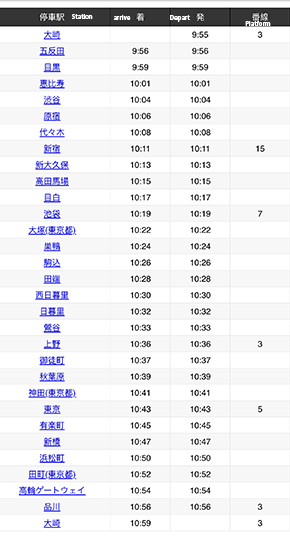
Off peak the frequency is basically 5 mins, with the evening peak 3~4 minutes before going back to 4~5 mins around 8pm. The first trains in each direction depart around 4:30 from Ikebukuro, Osaki, & Tamachi. The last full full circle (Osaki->Osaki) departs Osaki at 23:41 and arrives back at 00:50 on the outer circle and 23:49 arriving back at 00:56. There are later trains, but these do not do a full circle, instead terminating at Ikebukuro (both directions) and Shinagawa (inner circle).
Although the zero km post is at Shinagawa, most trains start and end their journeys at Osaki, so early and mid mornings and again late afternoon and late evening trains can be seen coming into and being taken out of service and being moved from / to the Osaki depot. To a much lesser extent this can also be seen at Ikebukuro, although only early morning and very late evening.
For reference, in 1988 frequency of the Yamanote line was 3~6 minutes, so much the same as today.
Another interesting feature, and not very common in Japan is that the platform train information displays do not show the time of the next train, but how many minutes it is due in (similar to the London Underground). It was felt that what passengers are really concerned about is how long they have to wait for the next train, particularly as wait times were only 3~5 minutes) and with the reduction of clocks on station platforms, showing the time of the next train had less meaning.
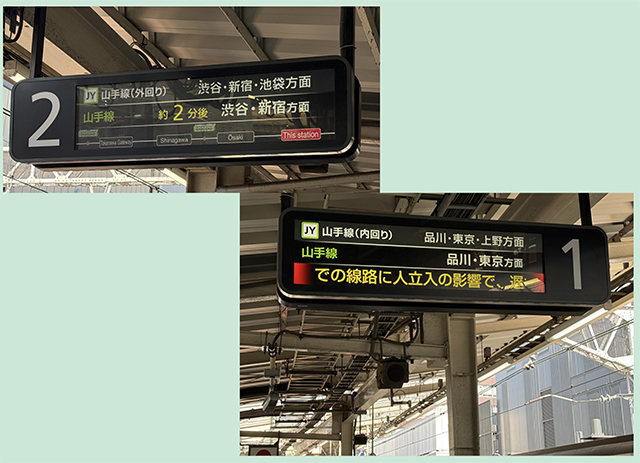
When the Yamanote Line stops for any length of time, Tokyo is thrown into chaos….
Another indication of how busy and how important the Yamanote Line is, is when the line is stopped for any length of time and the chaos that literally affects the whole of Tokyo. A good example of this is when a power failure hit the Eastern side of the Yamanote Line (also affecting the Keihin Tohoku Line and for a time the Tokaido Main Line) shut down the Yamanote line all morning on the 16th January 2026. Despite there being several JR and non JR Lines running parallel to many sections of the Yamanote Line, these could not cope with the number of extra passengers, throwing those services into chaos and the government asking for help from bus companies outside of the capital!
It is no exaggeration to say that it is the heart of Tokyo and without it Tokyo falls into chaos!
Has anything been done to ease the overcrowding and reduce dependency on the Yamanote Line?
Yes, in fact the railway companies, including JR, together with the Tokyo and Central Governments have been continually investing in public transport in Tokyo. So what may seem to be bad overcrowding conditions now, was actually much worse in times gone by. Some of the improvements that have been made are:
- Starting in 1991 a 11th car was added to the 10 car Yamanote Line trains (205 series). This car (no 10) originally had 6 doors and during the morning rush hour most seats were folded up making the car mostly standing. This car however was changed to a conventional 4 door car between 2007~2010.
- In 2001 the Shonan Shinjuku Line started service, using the Yamanote Freight Line to provide services linking the Tokaido Main Line / Yokosuka Line with the Utsunomiya / Takasaki Lines. This meant that passengers from south and north suburbs of Tokyo to travel directly to Ikebukuro, Shinjuku and Shibuya without having to change at Shinagawa or Ueno on to the Yamanote Line.
- Saikyo Line which connects Omiya and Kawaguchi to Tokyo has been successively extended, Ikebukuro~Shinjuku 1986; Shinjuku~ Shibuya/ Osaki 1996; connection with the 3rd sector Rinkai Line in 2002; through services on the Hiinkaku Line and Tokaido Freight Line to connect to the Sotetsu Line were started in 2019.
- The JR UenoTokyo Line connected the Tokaido Main Line with the Utsunomiya / Takasaki Lines and Joban Line in 2015 thus similar to the Shonan Shinjuku Line provided a direct route avoiding needing to change between Shinagawa, Shimbashi, Tokyo and Ueno.
- Tokyo Metro Fukutoshin Line connecting Ikebukuro (Yurakucho Line) with Shibuya and providing through train connections with the Tokyu Toyoko Line, Seibu (Ikebukuro) lines and Tobu Tojo Line thus avoiding the need for passengers to change on to the Yamanote Line at Shibuya and Ikebukuro to get to Meiji Jingumae & Harajuku and Shinjuku. (opened in stages up to 2008) provided relief to the Yamanote Line Western side)
- TOEI Mita Line in 2000 was extended to Meguro where it connected to the Tokyu Meguro Line and provided relief to the Eastern side of the Yamanote Line.
Trains & Operational matters
Train types


As mentioned above all the lines that now make up the Yamanote Line have been electrified since at least 1909. Rolling stock used on the line was as follows
Pre Electrification: There were no steam locomotives specific to the Yamanote Line (or its predecessors) but locomotives such as 8620, 9600 & C11 series tank engines were used on urban services in the Tokyo area. Examples of these locomotive types can be seen at Ome Railway Park and other locations. There are preserved C11 types around the country.
D51 steam locomotives would also have been seen even after electrification on freight services. There are many D51 steam locomotives preserved today (click here for how Steam Locomotive info page).
Post Electrification
- Early Days of electrification saw DeHo6340 railcars & later 63 series units were used. Also 72 series were used. These units were used on all the DC electrified urban lines in the Tokyo area.
- In 1961 the 101 series was introduced and operated on the Yamanote Line until 1969.
- In 1963, the first green liveried units were introduced in the form of the 103 series (see above) These were in service on the Yamanote Line until 1988.
- The 205 series, (see picture above) which was introduced by JNR in 1985. The 205 series was a stainless steel bodied train designed with energy saving traction equipment as well as many other “new” features. They operated on the Yamanote Line until 2005. An important note to add is that it was during the 205 series era that Yamanote Line trains were extended from 10 car to 11 car with the addition of an extra car (became car 10). This was started in 1991.The extra car also had 6 rather than 4 doors and during the morning rush hour it became a mainly standing only car as all the seats (except those at the end s of the car) were designed to fold up (automatically).
- The first JR East designed train on the Yamanote line was the E231 series train, or to be more accurate the 231-500 series. These cars were introduced from 2002. As the 205 series car 10 with 6 doors was relatively new, many of these were removed from the 205 (as they were withdrawn) and reused in the E231 series. From 2007~2010 the 6 door car 10 cars were replaced with 4 door cars. This was partly to help with the introduction of platform doors. E231 series operated on the Yamanote Line until 2020. Many however were cascaded to other lines. Note that the Yamanote Line E231series has the smaller cab with the door next to the drivers seat
- E235 series (see above for picture), a single protoype was introduced in November 2015 but due to technical issues it had to be temporary withdrawn, and was reintroduced in March 2016. The 235 series has many new innovations compared to the E231-500 that it replaced, not least a new designer modern look. The other changes include:
- Six independent motor cars (The E231-500 series had married pairs); new VVVF inverters using silicon carbide devices and and full regenerative braking improving energy efficiency; fully enclosed traction motors; oil‑free compressors, making maintenance easier.
- Onboard real‑time condition monitoring continuously sends operational and diagnostic data to control centers and depots for remote and better pre problem diagnosis.
- Passenger facilities: LED lighting throughout, large LCD Info & advertising displays inside and LED destination displays outside (with extended information). All seats are slightly wider yet offer more seating per car than E231‑500. All cars have closed circuit video monitoring.
- Reinforced body structure with improved crash energy absorption, 45‑degree cut corners for offset collisions, and a front-end design that separates a crushable zone from a survival space for crew.
- With the introduction of platform doors, the green line is removed and only the fronts and doors are Green
How many units are available to operate the Yamanote Line?
| April 1987 | 34 x 103 series + 21 x 205 series (all 10 car) Total 55 units |
| October 2005 | 49 x 231 series + 6 x 205 series (all 11 car) Total 55 units |
| October 2015 | 51 x 231 series (all 11 car) Total 51 units |
| October 2025 | 50 x 235 series (all 11 car) Total 50 units |
Improvements in train reliability and easier maintenance has led to a slightly fewer number of trains being required even though a similar frequency of services has been maintained.
Depots
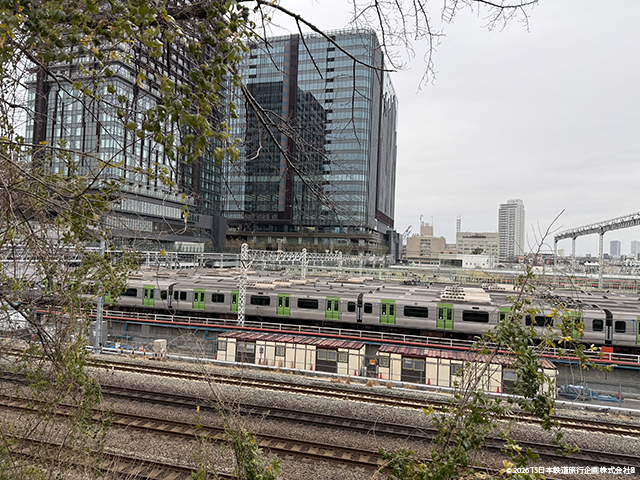
The main depot for the Yamanote Line is near to and accessed from Osaki at Oi. In fact it is visible from the Keihin Tohoku Line between Oimachi and Shinagawa. It is part of the Tokyo General Rolling Stock Center (東京総合車両センター) and the Yamanote Line depot is next to the Oi Maintenance works (and is one of 5 heavy maintenance depots that JR East operates). This is an interesting depot as it is on two levels. [the new “Oimachi Tracks” mall Station Plaza has great view of the depot and a selling point of the new Hotel Metropolitan Oimachi Tracks is the view it has over the Yamanote Line depot – https://www.oimachi-tracks.com/en/ ]. The Oi Yamanote Line depot provides stabling as well inspections.
The second depot is just north of Ikebukuro Station on the Saikyo Line. This depot is just used for stabling.
Train crews are based at Osaki and Ikebukuro.
Signalling & control systems
The Yamanote Line is controlled from JR East’s Tokyo General Command Center using JR East’s Autonomous Decentralized Transport Operation Control System or “ATOS”. ATOS manages timetable control, route setting, passenger information, and disruption management. On board trains, the Digital Automatic Train Control (D‑ATC), a communication‑based cab signalling system continuously transmits movement authority and generates dynamic braking curves for the train. D-ATC controls the train speed and stopping points
This means that there are no line side signals(*) and blocks are not fixed. Train positions are determined by track circuits.((*) except for repeater signals mainly in stations and at certain points some colour aspect signals that are normally turned off but can be used in case of need. Entry / exit to depots & sidings is controlled by ground level shunting signals).
An important job that the Tokyo General Command Center does, not only for the Yamanote Line but for all lines under its control is when disruptions arise they regulate the flow of trains. So if one train is delayed, for example by trouble at one station, the controller can hold back trains behind so that an orderly flow can be made and also to avoid subsequent trains having to stop between stations. The control center maintains contact with train crews via radio and also there atr indicators on stations, for train crew, telling them to wait and what their new departure time is.
It is an urban myth that in Japan all trains run on time to the second all the time, you may be surprised how often delays occur, although most are just for a few minutes, but what the railways in Japan are good at is that when a delay does occur getting things running back to near normal as quickly as possible.
Future Driverless operation?
Yes, JR East is developing this with the E235 series units that were designed with driverless trains in mind, and night time / out of service testing is being carried out.
The current plan is to go to GOA4 level driverless operation by 2034 (GOA=Grade of Automation. Level 4 is completely driverless, ie no attendant capable of driving the train on board. Currently Yamanote Line is at GOA0 as although using ATO, the driver is responsible for stopping, starting and the D-ATC with ATOS providing speed enforcement and traffic control. Testing at GOA2 level is being carried out. This level is automated driving but with a driver in the cab who can over ride controls. The plan is to get to GOA3 by 2030 (driverless with onboard attendants who can bring the train to a stop in an emergency and GOA4 by 2035.
The Yamanote Line, because it is basically a sealed line with no direct interaction with other lines and parts of the shinkansen network for similar reasons are where JR East is concentrating its Driverless Trains initiatives.
Other Infrastructure changes
- The 30th station on the Yamanote Line, Takanawa Gateway, opened March 2020. As well as being the station to serve the new Takanawa Gateway Plaza with shops and offices it is also a testing ground for new station initiatives, particularly using robotics and automation.
- Yamanote Line & Keihin Tohoku Line tracks and platforms remodeled and Yamanote Line stabling lines removed at Shinagawa Station to make platforms wider and changing trains easier. This is also part of an initiative to expand the shopping area at Shinagawa Station and the remodeling of the Keikyu Shinagawa Station (using the ground where the stabling sidings were situated).
- Removal of the stabling line north of Tamachi Station (used by Yamanote Line trains) to make way for the Haneda Access Line. This used to used in conjunction with the Shinagawa sidings as it allowed trains to be switched between the outer and inner circle lines as well as for overnight stabling.
- Remodeling of JR Shibuya Station making use the land given up by the old Tokyu Toyoko Line Shibuya Station to bring all platforms for all JR lines parallel and also widen the Yamanote Line platforms.
- Platform doors installed at most stations, and eventually will be at all stations.
- Started with the E231 series, sophisticated Trains Information System that amongst other things provide information on carriage loading and temperatures and operational information for train crews.
- Also starting with the E231 series but expanded with the E235 series use of large LCD screens for passenger information and advertising.
Good spots around the Yamanote line for Rail Enthusiasts
For viewing trains (not just the Yamanote Line)
- Shinagawa Station – The official start of the Yamanote Line and where the zero mile (KM) post is situated. One of the busiest stations on the Yamanote Line. The Tamachi Depot (not used by Yamanote Line trains) is to the north of the station. Photography possible from South and North ends..
- Close to Shinagawa Station – Yatsuyama Bridge and Crossing From Yatsuyama Bridge you can see trains on 4 JR lines (JR Yokosuka Line, JR Tokaido Main Line, Keihin Tohoku Line & Yamanote Line). Especially good for photos and videos during the morning and evening rush hours. Yatsuyama Crossing on the Keikyu Main Line, you can see Keikyu Line trains (Keikyu, Keisei, TOEI Asakusa Line, Hokuso Railway Line) as they wind across the viaduct crossing the JR Lines and across the level crossing.
- Takanawa Gateway Station – the newest station on the Yamanote line is situated next to the slimmed down Tamachi Depot, which although still large and busy being used for stabling (Tokaido Main Line, Joban Line, Odoriko Limited Express & Sunrise Express trains). At the north end of the station you get a good view of Yamanote line, Keihin Tohoku Line, the north bound line using the viaduct to fly over the Yamanote Line tracks, and Joban and Tokaido lines heading north. In the background you can see the Tokaido Shinkansen.
- Hamamatsucho – Start of the Tokyo Monorail. The Monorail is owned by JR East (used to be Hitachi Transport Systems) but operates as a separate entity.
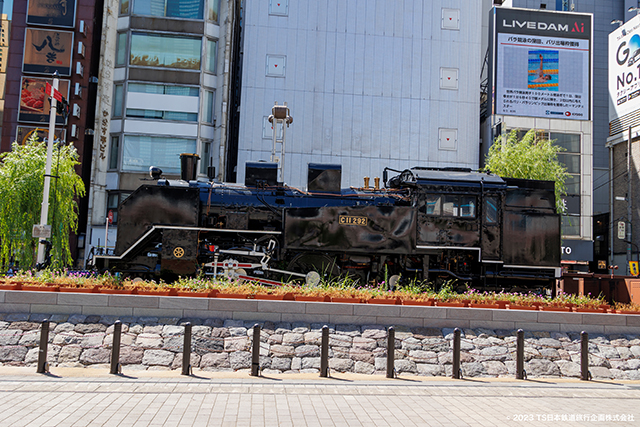
- Shimbashi – The famous Shimbashi SL Square situated just outside the station and home to SL C11 292 (see picture above). Also start of the automated new transit system “Yurikamome Line”
- Tokyo Station – although there are 100s of station in the Tokyo prefecture, there is a station called Tokyo. Famous for red brick Marunouchi Station Building with its plaza on the Marunouchi side it is one of the busiest stations in Tokyo and start of the Tohoku and Tokaido Shinkansen routes. Nowadays most trains actually pass through the station rather than it being a terminus, although the shinkansen lines, the Chuo and Keiyo Lines all end / start at Tokyo Station. Close to Tokyo Station, the JP Tower “Kitte” shop and restaurant part, has a roof top garden that has views of tracks on the south side of the station,
- Kanda Station good for photography Northern approaches to Tokyo Station (Chuo Line Rapid Service, Yamanote Line, Keihin Tohoku Line
- Akihabara – Interesting station with the Yamanote, Keihin Tohoku and nowadays the Tohoku & Joban Lines running North-South and the Sobu Line (Chuo-Sobu Local Line) running above East~West. Near by is Manseibashi, former station (terminus of the Chuo Line), site of the old railway museum and goods yard, now a shopping and cafe area with an observation deck (and cafe) providing close up views of the Chuo Line trains passing (https://www.ejrcf.or.jp/mansei/english/)
- Ueno – One of the busiest stations. Before the Tohoku Shinkansen and into the early 2000s was the Tokyo terminus of many Blue Trains running between TokyoSendai~Aomori / Akita / Hokkaido as well as Kanazawa / Niigata / Yamagata. Not so good for photography but nevertheless an interesting station that still retains the feeling of history
- Nippori Station – Shimogoi Bridge (exit station and cross the road). Popular with train spotters as you can see trains on the (JR) Yamanote Line, Keihin Tohoku Line, Utsunomiya / Takasaki Line, Joban Line, JR East shinkansen (approaching, exiting Ueno) and limited views of the Keisei Main Line.
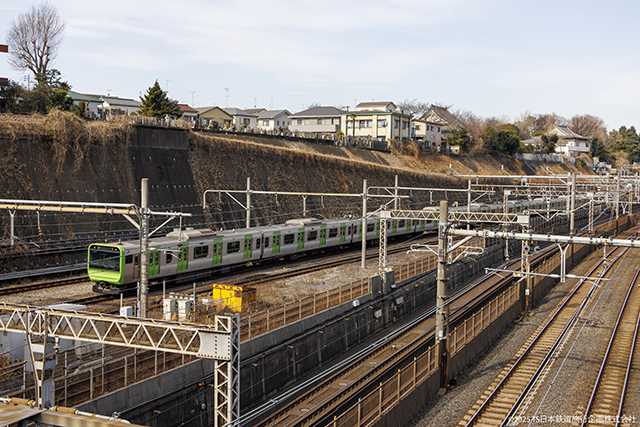
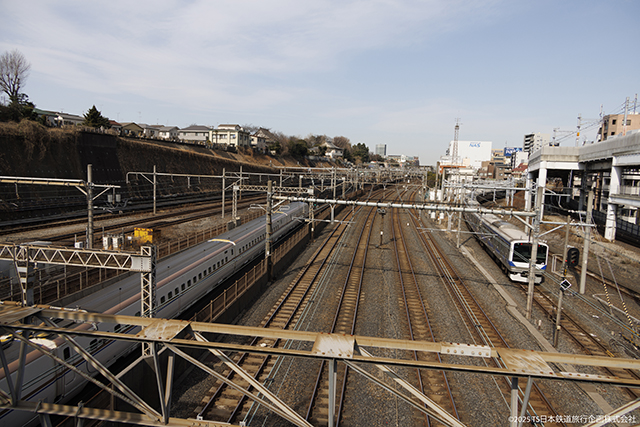
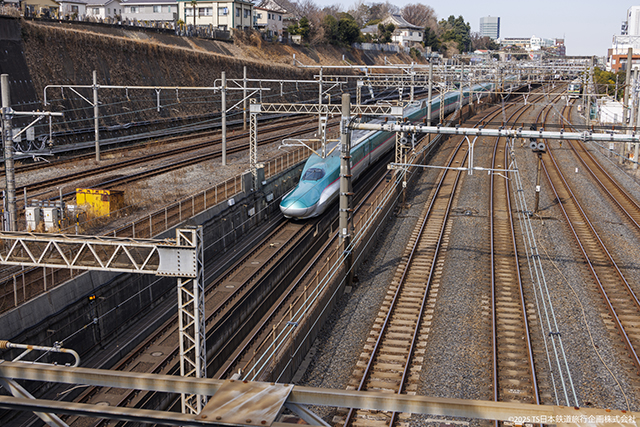
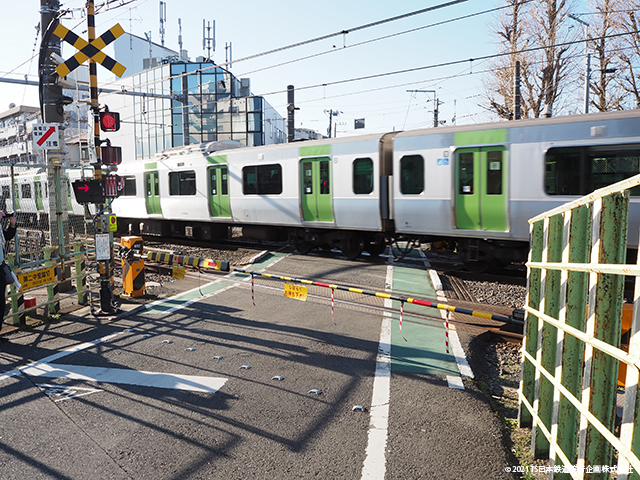
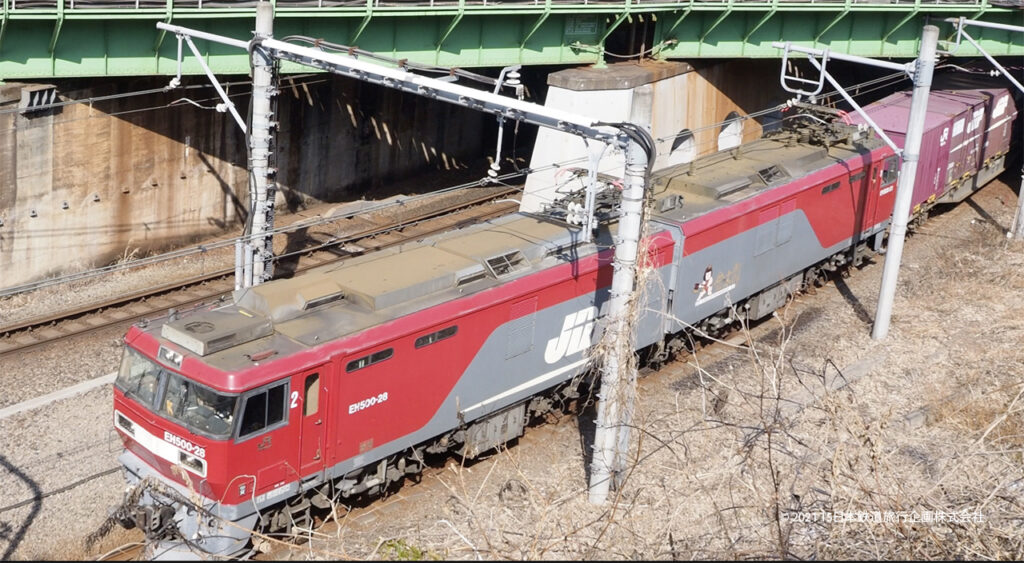
- Komagome (close to station) – Only level crossing on the Yamanote Line, close by is the Yamanote Freight Line where you can see Shonan Shinjuku Line trains and occasional freight trains. ( there is only one daytime scheduled freight train, although occassionally others use this line if they have been diverted from the Musashino Line)
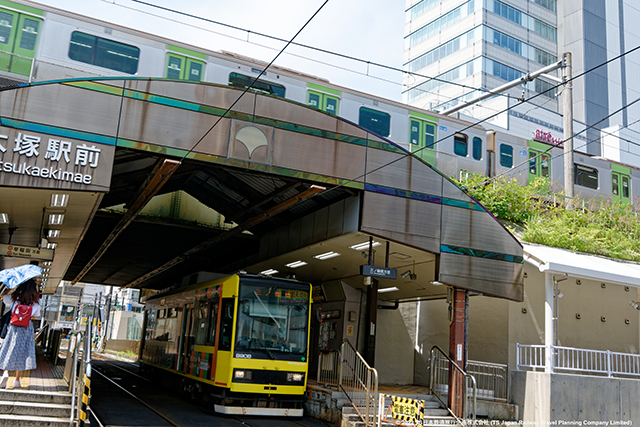
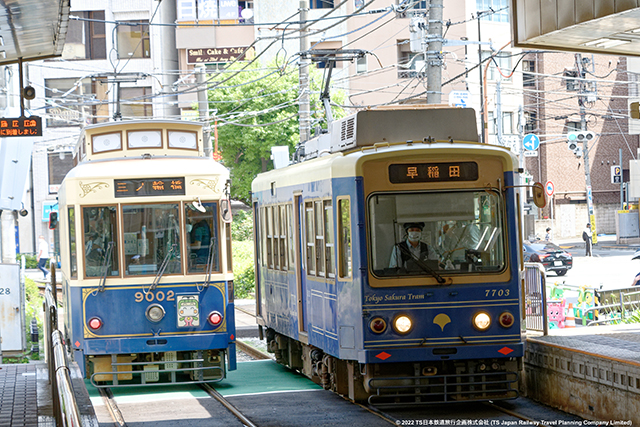
- Otsuka Station – good place to observe the Toden Arakawa Line Tram
- Ikebukuro Station Another busy station. It is also the junction of what used to be the Akabane Line (legally still is, but better known as the Saikyo Line when that was built alongside the Tohoku Shinkansen between Akabane and Omiya). The terminus of the Tobu Tojo Line (can be seen from Yamanote Line Outer Circle platform) and Seibu Ikebukuro Line (can be seen from the south bound Saikyo Line / Shonan Shinjuku Line platform)
- Takadanobaba Station When you approach Takadanobaba from Ikebukuro, or depart in the Ikebukuro direction you can see the tight curve of the Seibu Shinjuku Line as it goes under the JR Lines and heads west.
- Shinjuku Station the world’s busiest railway station, we would not recommend spending a lot of time for photography, but a good place to see how a busy urban network works. On the northern approach the Yamanote Line flies over the Chuo Main line. [you can get a good view of the North bound approach including the Seibu Shinjuku Line and the Chuo Line from the hotels (Hotel Groove Shinjuku and Bellustar Tokyo) in the Tokyu Kabukicho Tower]
- Shinjuku Times Square – trains arriving / departing Shinjuku Station (Plaza on south side of JR Station / Takashimaya)
- Yoyogi Station Crossing – just outside the station, there are 2 interesting level crossings where you can see Yamanote Line in the background (over bridge) and Yamanote Freight Line (crossing). On the crossing you can see Saikyo Line (JR E231/E233; Tokyo Rinkai Line, Sotetsu Line trains), Shonan Shinjuku Line (E231 & 233), Narita Express (E259) and other occasional limited express & freight trains. If you lucky you can get trains crossing the crossing lining up with Yamanote Line train crossing the bridge [Warning, this area is becoming popular with Instagramers]
- Ebisu Station – good views at the northern end of the platform to see Yamanote Line, Saikyo Line, Shonan Shinjuku Line, Narita Express trains and occasional freight (see note above).
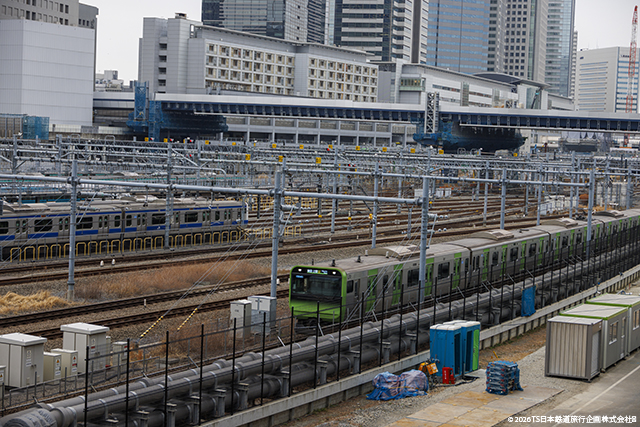
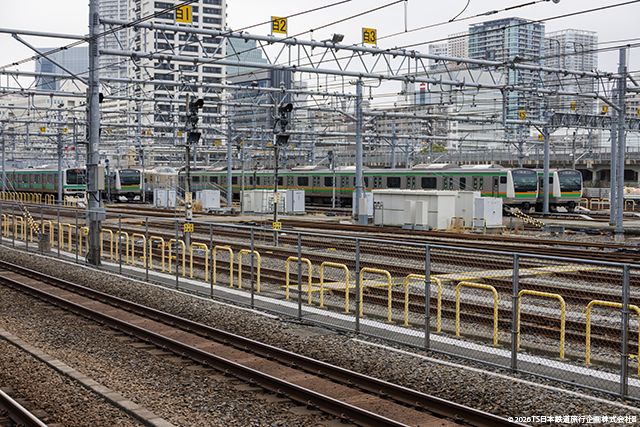
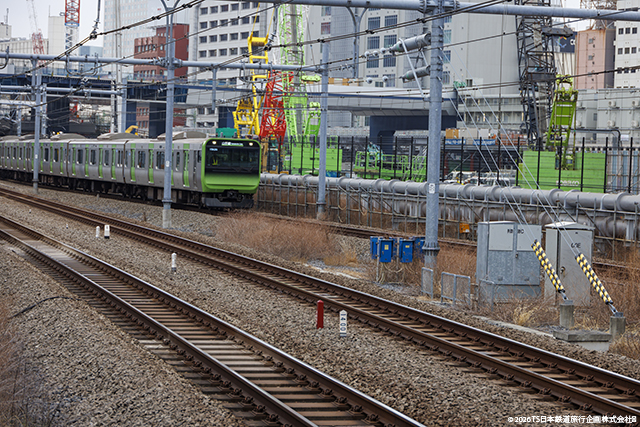
- Osaki Station – an interesting station that has grown over the years where you can see the Yamanote Line (including trains starting / ending journeys; Saikyo Line, Shonan Shinjuku Line, Narita Express trains, the 3rd sector Rinkai Line and even occasional special trains. Although very occasional trains arriving and departing the Tokyo General Rolling Stock Center (東京総合車両センター) for heavy maintenance pass through Osaki, as the Oi works is close to Osaki.
Conclusion
Although we agree that the Yamanote Line is not going to be every rail enthusiasts cup of tea, we hope that we have shown you that it is not just an “ordinary” urban rail line, but a line with history and is a good example of one of the many aspects of Japan’s railways.


Comments