

Table of Contents
Welcome
Welcome to the October 2026 Japan Rail Enthusiast Magazine. Although parts of Japan, particularly Chiba Prefecture East of Tokyo, are still recovering from the serious weather events in August and September, October has been relatively quiet. See below for the latest updates.
Mid October normally sees the semi annual seasonal and other changes in the railway timetable. Although there are some seasonal changes, which are mostly known about as affected services are already dated, there are no major changes this year. If you are travelling in Japan though, still make sure that you have used current timetable information as although no major changes, there could still be minor changes, a train leaving or arriving times changing by a few minutes could make a big difference on your plans!We list some of the changes that may be of interest to rail enthusiasts.
JR Tokai has announced the planned successor to its N700 series of shinkansen. It will be the first complete redesign of its and JR West’s Sanyo Shinkansen since the first N700 series model was introduced in July 2007. More below.
The Utsunomiya Tram in Tochigi Prefecture is now busy working on extending the line westwards after the better than expected success of the initial section that runs eastwards through the more industrial part of the city.
Stephen Turner
Steam News
SL Yamaguchi
The long awaited return of C57-1 “The Lady” happened on the 3rd October. C57-1 had been out of service since 2020 due to mechanical issues. unfortunately, at the time of writing, C57-1 was having boiler problems and the train had to be diesel hauled on the 24th (by DD51-1043, the DD51s DLs are a fairly rare sight nowadays) and on the 25th SL D51-200 stepped in.
Assuming no major problems, and as reported before, C57-1 is expected to be the main locomotive hauling the SL Yamaguchi until the end of the current season and in 2027.

SL Gunma
Although not officially announced yet, the SL Gunma Yokokawa and SL Gunma Minakami are expected to be steam hauled again from next spring and both Takasaki based steam locomotives, C61-20 & D51-498 will be available and alternating duties.

JR Tokai announces new Shinkansen model for the Tokaido Shinkansen (and Sanyo Shinkansen). Further upgrades to N700S and N700A/a
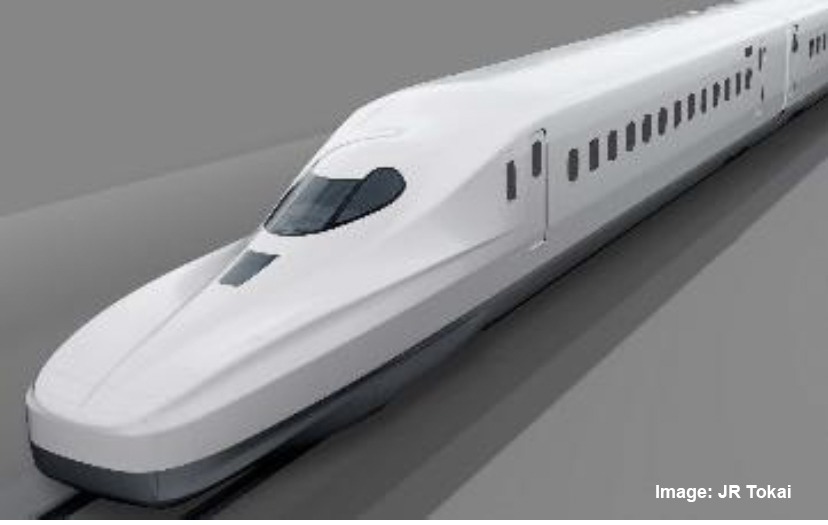
JR Tokai has announced its first completely redesigned shinkansen model since the N700 series entered service in 2007, although the N700S did have many major new innovations taht the S0 series will incorporate.

The new model will be known as the S0 series. S signifies shinkansen and supreme (for those wondering what could come after the N700 “Supreme” and “0” signifying a new starting point (after you reached Supreme, you can only really start again).
One of the major changes for the S0 series compared to the N700S series is the introduction of GOA2 Automated driving. GOA2 is a level of “Grade of Automated Driving” that the train basically drives itself but requires a qualified driver in the driving cab who can take over the controls if needed.
Another big change is that due to further standardisation of equipment on each carriage it will be easier to operate trains of different length. Previous shinkansen models required a lot of work to alter the train length (for example when JR West reduced 16 car 500, 700 & N700 models to 8 cars a lot of equipment had to be moved making it a major undertaking). Although the N700S can be split (in depot), the S0 series will be much easier to split. Apart from JR Tokai and JR West having different requirements on trains that operate within their respective shinkansen routes, it is hoped that this flexibility will make it easier to sell the trains to overseas operators.
There will also be upgrades in passenger facilities on the train and other changes to improve passenger comfort, particularly in the green car. (Note: the image is only a preliminary design image and does not show the “blue lines”. These will be added in some form on the final versions)
JR Tokai also plan to upgrade passenger facilities on the N700S and also some of the N700A/a trains will see limited enhancement of passenger facilities.
The plan for S0 series roll out is as follows
| Fiscal 2029 | Fiscal 2030 | Fiscal 2031 | Fiscal 2032 | Total |
|---|---|---|---|---|
| 8 | 7 | 7 | 3 | 25 |
JR Tokai press release https://jr-central.co.jp/news/release/_pdf/000046070.pdf (Japanese)
JR East announced that they will not restore the section of Kururi Line damaged by typhoon and due to be permanently closed next April
JR East has announced that it will not restore the Kukuri Line between Kururi and Kazusa-Kameyama in Chiba Prefecture which incurred severe damage during Typhoon 25 in September.
This section of the Kururi Line was due to close in April 2027 due to low passenger levels and only had 8 trains a day. The damage incurred during Typhoon 25 in September 2026, in several locations, will take 6 moths to repair from the start date, which means that the line could not be restored before its official closure date on the 1st April 2027.
JR East and local governments, Kimitsu City and Chiba Prefectural Government, had already agreed to the closure on 1st April 2027 which had been approved by the Ministry of Land, Infrastructure & Transport. Alternative travel arrangements (bus / taxi) will remain in place). Services between Kisarazu and Kururi will continue and are not in danger of closing.
A scene not to be see any more – Kururi Line Kazusa Kameyama Station


JR East Press Release not currently available.
JR Tokai and JR West to raise fares on Nozomi and Mizuho Shinkansen Services
JR Tokai and JR West have announced that the “shinkansen fare” for the fastest services on the Tokaido and Sanyo Shinkansen routes will rise in 2027.
- Nozomi & Mizuho services Reserved seat fares will be increased from 1st July 2027 (unreserved seats no change, but at busy holiday periods Nozomi & Mizuho services are all reserved seats).
- Green Car Seats on all Tokaido & Sanyo Shinkansen trains These will be increased from 15th December 2027. Green Car accommodation on these lines will be upgraded (gradually) and new Green Car lounges will be introduced at Tokyo, Shinagawa, Nagoya, Shin Osaka and Hiroshima Stations from end of 2027 through to 2029.
- Supreme Class Seats and Supreme Class Cabin fares will be increased on both 1st July (Cabin) and 15th December (cabin & Seat)
(note: basic fare is unchanged and also ordinary reserved seat and non reserved seat shinkansen fares in Hikari, Sakura & Kodama trains are unchanged, as are non reserved seat shinkansen fares on Nozomi & Mizuho services)
Example fares
| Between | Basic fare + Current Ordinary reservation fare | Basic Fare + New Ordinary Reservation Fare | Basic fare + Current Green reservation fare | Basic fare + New Green Reservation fare |
|---|---|---|---|---|
| Tokyo~Nagoya | ¥11,300 | ¥11,880 | ¥14,960 | ¥18,050 |
| Tokyo~Shin Osaka | ¥14,720 | ¥15,420 | ¥19,590 | ¥23,290 |
| Tokyo~Hiroshima | ¥19,760 | ¥20,620 | ¥27,020 | ¥32,390 |
| Shin Osaka~Hakata | ¥16,020 | ¥16,300 | ¥22,090 | ¥26,170 |
In the case of the Supreme Class cabin (car 10) the fare will increase from ¥60,790 to ¥64,490 to travel between Tokyo and Shin Osaka.
Note this only applies to Tokaido and Sanyo Shinkansen routes.
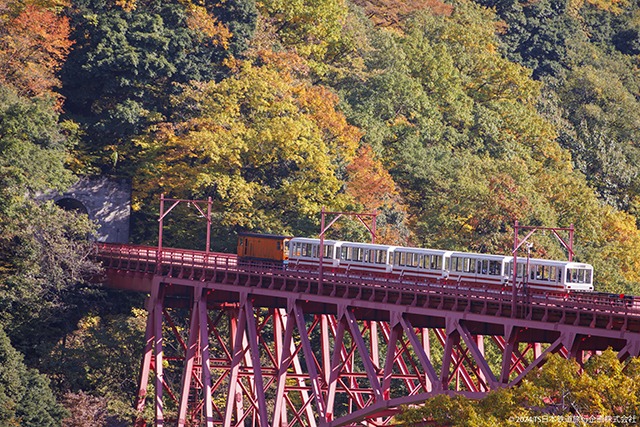
Kurobe Gorge Railway fully reopened on 1st October 2026

After nearly 2 years and 10 months the tourist / industrial Kurobe Gorge Railway that suffered severe damage during and from after shocks of the 2024 Noto Peninsula Earthquake has finally be able to reopen its full passenger service between Unazuki and Keyakidaira. It had been operating to a temporary station at Nekomata.
The 2026 regular season for the tourist railway will end on 23rd November. There are currently 11 return journeys a day, which are only stopping at Kuronagi and Kanetsuri.
The Kurobe Gorge Railway was originally built by Kansai Electric Power to serve its various power generation facilities along the Kurobe River gorge in Toyama prefecture. The railway opened in 1926 between Unazuki–Nekomata and was extended to Keyakidaira in 1927. It started carrying passengers in 1953, mostly tourists.
Although the tourist railway only goes as far as Keyakidaira, the track and industrial trains actually go further. Approximately 500 meters beyond Keyakidera Station there is a special elevator that can raise, a single railway wagon at a time, 200m to Upper Keyakidaira, and on to the “upper railway system” which runs from Upper Keyakidaira(欅平上部) to Kurobegawa No. 4 power station (approx 6.4km) passing through the the famous High-Temperature Tunnel and the Sennindani area.


Changes to the Hankai Tram as part of the Nankai Railway Elevation project in the Hamadera area.
A major project to elevate the Nankai Railway’s Main Line in the Hamadera area will eventually see the Hankai Tram route to Hamadera Ekimae realigned between Funao and Hamadera Ekimae tram stops so that instead of crossing the Nankai Main Line and Hamadera Ekimae tram terminal being to the west of the current Nankai Hamadera Koen station, it will be diverted to the east side of the new Hamadera Koen station, where a new tram terminal will be.
This is in preparation for the Nankai Main Line Elevation Project in the Hamadera area, and without moving the Hankai Tram line, services would have had to be cut short for around 5 years to allow for construction to take place. Instead by realigning the line services can continue through out. this has meant some changes to the timetable, although generally service levels are very similar to what they were before the change, although timings have changed.
As a preparation for this, on the 10th October the route between Funao and Hamadera Ekimae was reduced to single line operation. Next a new route will be built that keeps the tram line to the east of the Nankai Main Line to a new tram terminal at Hamadera Station. The timing of the next stages are currently uncertain as the elevation project is turning out to be more complicated than originally envisaged.
For rail fans, The Hankai Tram is the only remaining tram line in the Osaka area and also has the oldest trams in Japan that are still in regular service. The current Hamadera Ekimae tram terminal is a good photographic spot, particularly at night time.


Utsunomiya Light Rail to extend westwards but has a major challenge: how to cross the JR Lines…
Utsunomiya City Government has received approval from the Ministry of Land, Infrastructure, Transport and Tourism (MLIT) for a 4.9km extension of the Utsunomiya Light Rail into the city center. the current line runs eastwards towards the town of Haga and serves the industrial areas Utsunomiya and Haga. Ridership of the current line quickly exceeded expectations which has led to the enthusiasm for the western extension.

There is however one major challenge…how to get across the JR Lines. Utsunomiya is served by the conventional rail Tohoku Main Line (Utsunomiya Line) which is at ground level and the Tohoku Shinkansen Line which is elevated, with of course Utsunomiya station in the middle. [the Utsunomiya tram terminal is on the eastern side of Utsunomiya Station]
The current idea is for the light rail to travel via a ramp that will take it in between the conventional rail lines and the shinkansen rail lines. this of course is not as simple as it sounds, particularly as neither the conventional or shinkansen lines can be closed or the busy Utsunomiya Station.
The extension will have 12 stops and will run to Kyōiku Kaikan-mae, (The Tochigi Education Hall). It will have 10 trains an hour in the rush hour and 6 trains an hour during off peak hours. Journey time from Utsunomiya Station (west side) to the education Hall would be 20~22 minutes. An additional 14 two car tram sets would be required. And for those rail fans who have walked between the JR Utsunomiya Station and the Tobu Utsunomiya Station, a 20~30 min walk), the tram extension will link the two stations!
Cost is estimated at ¥70bln and a target for completion is 2036. There is still a lot to do however before work can start. The central government approval just gives outline approval, detailed plans still need to be drawn up and contracts awarded.
Quick News
Kyushu earthquake Update
- Kyushu Shinkansen The Kyushu Shinkansen restarted operations along the full line on the 18th September. There are however timetable revisions due to speed restrictions and some trains between Kumamoto and Kagoshima have been cancelled.
- JR Conventional Lines Full services resumed on the 10th October.
- Hisatsu Orange Railway Full service resumed on 13th October, after the Yatsushiro~Higo-Tanoura section which was most heavily damaged during the earthquake reopened.
Chiba Typhoon no 25 update
- JR Uchibo Line between Anegasaki–Nagaura is still closed but the planned reopening date has been bought forward to the 9th November. Originally JR East expected the damage to take 3months to repair.
- JR Sobu Main Line – fully reopened on the 19th October
- Kominato Railway – services between Kazusa Ushiku and Kazusa Nakano remain suspended with no resumption date. On some days bus / taxi replacement services are available, but intending passengers should check before travelling. Services are operating between Goi and Kazusa Ushiku.
JR Timetable changes Oct 2026
Apart from the news item below, not much is changing this year with the traditional Autumn timetable change in October. Full schedule of special trains operating over the Autumn & winter period (and others taking the winter off) but no big changes to the general timetable.
If you are planning to travel in Japan, you should make sure that any travel planning apps you are using has the correct date, as although no big changes happening there could small changes that could effect your trip.
[some non JR railway companies had made some limited changes to their timetables in recent weeks]
End of regular services of JNR 115 series in Okayama area
One notable change in the October JR timetable (although it does not actually show in the public timetable) is that the yellow 115 series, ex JNR, electric units are no longer rostered for regular services in the Okayama area, mainly the Ako Line and Sanyo Main Line / Hakubi Line. The new 227 “Urara” electric units together with existing 223 series units will take over the few remaining services that were operated by 115 series. The new 227 series will be the predominant class in the Okayama area .
This means that the only area, for a short time at least, where you can still see 115s in regular use is the Shimonoseki ~Shin Yamaguchi area see our article Yamaguchi – A bastion of JNR era electric units.
E131-200 series debuted in the Nagano area on 1st October

As mentioned in the the April-May magazine, JR East is replacing its Nagano area 211 series (ex JNR) trains with new E131 series. the first E131-200 series debuted on the 1st October. As they are rolled out they will replace the 211 series on the Chuo Main line (Takao~Shiojiri), Shinonoi Line, Shinetsu Main Line and the JR East segment of the Iida Line. In total 16 three car units will be delivered.



Comments